

If you have ever been on a standard safari, you might know the feeling: ten safari trucks idling in a tight circle around a sleeping lion, while twenty telephoto lenses click in unison. It feels more like a press conference than a wildlife encounter.
Zambia is the antidote to that.
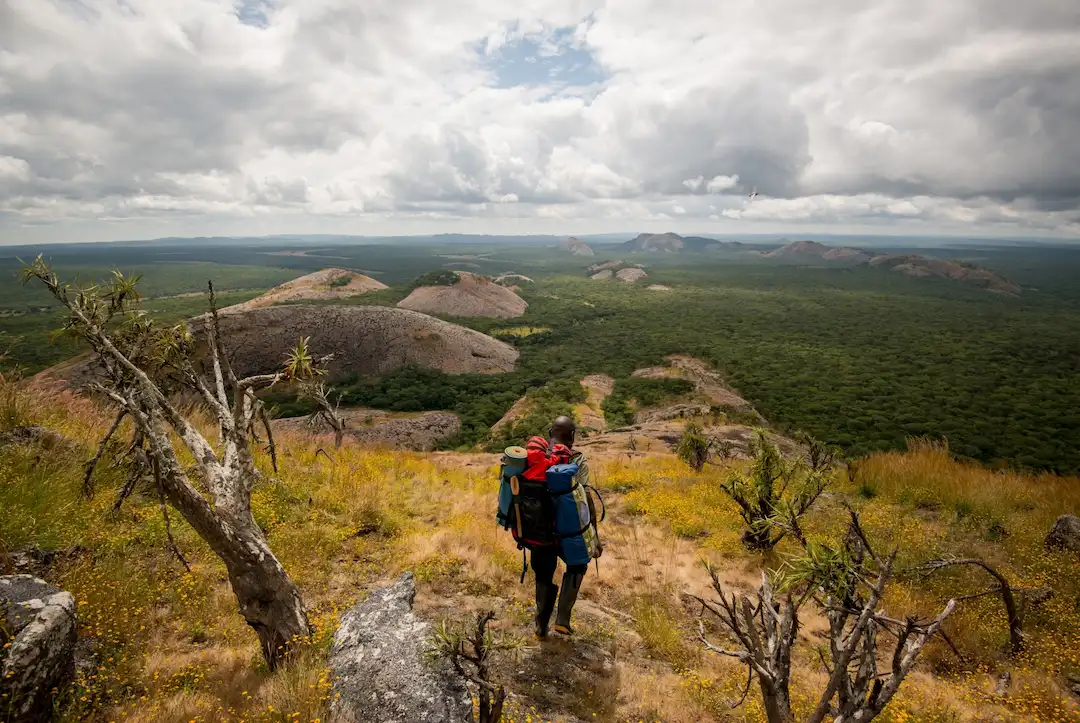
Here, safari still means what it was originally meant to mean: a journey. It is a country of wide-open floodplains, deep river systems, and massive, unfenced wilderness areas where animals move freely and humans are few and far between. This is the birthplace of the walking safari, where you step out of the metal cage of a 4x4 and onto the dry earth, feeling the crackle of mopane leaves under your boot and listening to the alarm call of a nearby baboon.
Our team has traveled these roads, crossed these rivers, and sat around campfires with the guides who know these parks like their own backyards. If you are looking for an honest, raw, and deeply personal connection with the African bush, a Zambia safari is where you find it.
Zambia's National Parks at a Glance
To help you navigate this massive country, we’ve broken down Zambia’s 7 most distinct national parks, from the legendary walking tracks of South Luangwa to the deep blue waters of Nsumbu on Lake Tanganyika.
| National Park | Key wildlife | Why we go | Peak Season | Entry cost |
| South Luangwa | Leopards, lions, wild dogs, Thornicroft's giraffe, carmine bee-eaters | Walking safaris & night drives to find leopards | June - October | $30 per person per day plus $15 per vehicle |
| North Luangwa | Buffalo, lions, elephants, Cookson's wildebeest | Multi-day bush camping far from any roads | June - October | $25 per person per day plus $15 per vehicle |
| Luambe | Leopards, elephants, wild dogs | Hippo-filled riverbanks with zero crowd pressure | June - October | $15 per person per day plus $15 per vehicle |
| Kafue | Cheetahs, lions, wild dogs, sable antelope, black-cheeked lovebirds | Lions on the Busanga Plains & boat safaris | June - October | $20 per person per day plus $15 per vehicle |
| Nsumbu | Elephants, leopards, hippos, crocodiles & exceptional birdlife | Watching elephants swim along Lake Tanganyika | May - October | $10 per person per day plus $15 per vehicle |
| Liuwa Plains | Wildebeest, black-maned lions, hyenas | The second-largest wildebeest migration | October - December | $40 per person per day plus $15 per vehicle |
| Lower Zambezi | Elephants, leopards, buffalo, hippos | Canoeing past elephants and tiger fishing | May - October | $30 per person per day plus $15 per vehicle |
| Kasanka | Straw-coloured fruit bats, sitatunga | The world's largest mammal migration | October - December | $10 per person per day plus $15 per vehicle |
1. South Luangwa National Park: Where the Walking Safari was Born
Step out of the vehicle. It is 06:00 AM, the air is crisp, and the sun is just beginning to filter through the winterthorn trees. Walking with a local guide through the dry woodlands of South Luangwa, you stop. He kneels down, sweeps his hand over a fresh print in the dust, and whispers: "Male leopard. Passed through about an hour ago." You hold your breath, your senses instantly sharpened.
South Luangwa is legendary for a reason. It is the birthplace of the walking safari, popularized here by conservationist Norman Carr in the 1950s. The park is anchored by the wide, meandering Luangwa River, which shrinks during the dry season, leaving deep lagoons packed with hundreds of splashing hippos and sun-bathing crocodiles.
Because of the high concentration of game along the riverbanks, South Luangwa offers some of the most consistent wildlife viewings on the continent. It is also one of the few places where night drives are permitted, giving you a front-row seat to the nocturnal world. This is where you watch leopards hunt under the cover of darkness, their spotted coats slipping silently through the tall grass.
- The Specific Moment: Sitting on a sandy riverbank at dusk with a cold Mosi beer, watching a family of thirty elephants slowly cross the shallow, golden waters of the Luangwa River just fifty meters away.
- Best For: First-time safari-goers who want raw foot-adventures mixed with top-tier wildlife viewing.
2. North Luangwa National Park: The Definition of Raw Wilderness
If South Luangwa is wild, North Luangwa is virtually untouched. There are very few roads here, only a handful of tiny, low-impact bush camps, and access is strictly regulated. This is not a place where you tick off the "Big Five" from a checklist; it is a place where you immerse yourself in the sheer scale of the African wilderness.
In North Luangwa, you explore almost exclusively on foot. Together with an armed scout and an expert local guide, you walk along the Mwaleshi River, a shallow stream that acts as the lifeblood of the park during the dry months. The landscape is dominated by large mopane forests and open acacia savannahs, where massive herds of buffalo move in clouds of golden dust.
Because tourist numbers are heavily limited, you can spend days out here without seeing another vehicle, another footprint, or any sign of the modern world. It is raw, demanding, and incredibly rewarding.
- The Specific Moment: Falling asleep in a simple reed-and-thatch hut, listening to the deep, resonant sawing of a leopard just outside the camp perimeter, knowing there are no fences between you and the wild.
- Best For: Hardcore adventurers and seasoned safari travelers who want to escape every trace of mass tourism.
3. Luambe National Park: The Intimate Hideaway
Squeezed between its northern and southern neighbors lies Luambe National Park, one of Zambia’s smallest and most overlooked conservation areas. For years, Luambe was left to its own devices, but today, this tiny pocket of wilderness is a testament to community-led conservation.
With only one small lodge operating in the entire park, you practically have the place to yourself. Luambe’s landscape is surprisingly diverse, featuring open plains, dense woodlands, and dramatic bends along the Luangwa River. The river here is home to some of the densest populations of hippos in Africa; you can stand on the high clay banks and watch hundreds of them jostle, grunt, and spray water in the shallows.
Because of its small size, Luambe has a relaxed, slow-paced rhythm. It’s the perfect spot to break up the journey between the north and south, giving you a chance to slow down, walk with local rangers, and understand how community conservation actually works on the ground.
- The Specific Moment: Joining the research team at dawn to check camera traps, feeling the excitement of being the first to see which elusive predators roamed the camp paths while you slept.
- Best For: Travelers seeking a quiet, highly exclusive bush experience with a strong focus on conservation.
4. Kafue National Park: A World Within a Park
Kafue is old, massive, and incredibly diverse. Covering an area roughly the size of Wales, it is one of the largest national parks in the world. Because of its sheer scale, Kafue contains several distinct ecosystems, meaning the landscape changes dramatically as you travel from south to north.
In the north lie the Busanga Plains, a vast wetland that floods during the wet season and dries into a golden grassland by July. Here, the horizons are endless, dotted only by lonely sycamore fig trees. Busanga is famous for its tree-climbing lions, cheetahs that sprint across the dry clay flats, and massive herds of red lechwe antelopes leaping through the remaining pools of water.
In contrast, the central and southern parts of Kafue are dominated by the Kafue River, where lush forests line the banks and quiet boat trips allow you to drift past nesting colonies of colorful bee-eaters, pods of hippos, and elephants drinking at the water's edge.
- The Specific Moment: Drifting silently in a small motorboat along the Kafue River as a giant martial eagle drops from a high branch, skimming the water's surface just a few meters in front of your bow.
- Best For: Those who want variety combining wide plains, river safaris, and excellent predator sightings in one destination.
5. Nsumbu National Park: Where the Bush Meets Lake Tanganyika
When you think of a Zambia safari, you probably think of dry savannahs and river valleys. Nsumbu National Park shatters those expectations. Located in the far north of the country, Nsumbu lies on the sandy shores of Lake Tanganyika, the longest and second-deepest freshwater lake in the world.
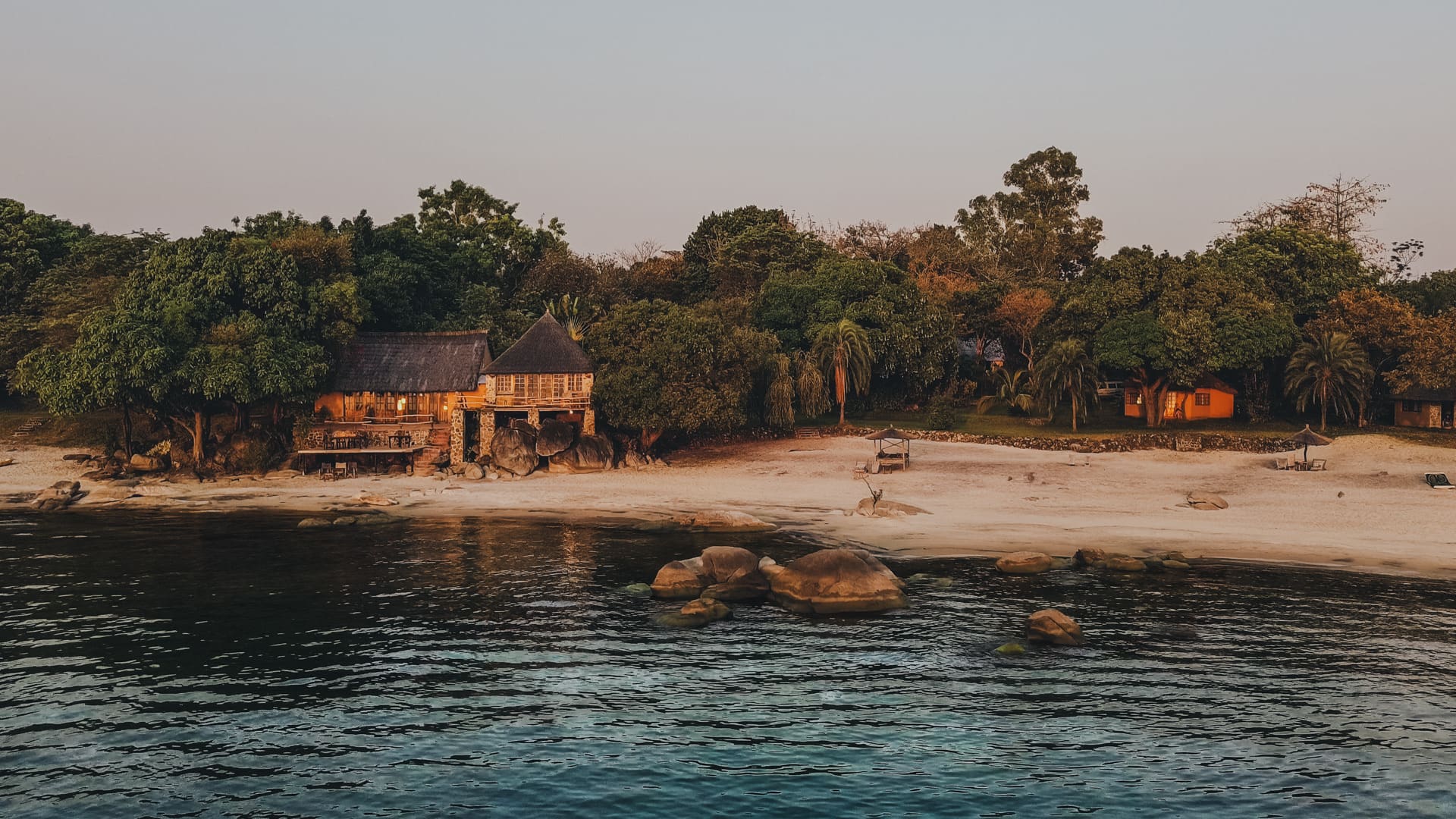
Here, the wild African bush meets deep blue water and white sandy beaches. It is a surreal landscape where you can spot elephant herds walking along the shoreline, while hippos swim in the crystal-clear lake waters. The park’s bays are protected, offering sanctuary to waterbirds, crocodiles, and an incredible array of colorful cichlid fish (which make Tanganyika a world-class snorkeling destination).
We love Nsumbu because it offers a "beach and bush" experience without the long flights to the coast. You can spend your morning tracking elephants on foot through the valley, and your afternoon kayaking along the rocky cliffs or fishing for legendary Nile perch.
- The Specific Moment: Sitting on a wooden deck at Ndole Bay with lodge owner Craig, drinking a cold drink as the sun slowly sets over the Congolese mountains on the far side of the lake, listening to the gentle lapping of the waves.
- Best For: Active travelers who want to combine classic wildlife tracking with water sports, snorkeling, and remote beach vibes.
6. Liuwa Plains National Park: Whispering Grass and Golden Horizons
For most of the year, Liuwa Plains is a vast, empty expanse of golden grass stretching out to a flat horizon under a massive sky. Located in the remote far west of Zambia, near the border of Angola, this park feels like the edge of the earth.
But when the rains arrive in October, the plains undergo a dramatic transformation. Water fills the shallow depressions, and tens of thousands of wildebeest migrate south from Angola in search of fresh grazing. This is the second-largest wildebeest migration in Africa, yet because of Liuwa’s remote location, you will likely be one of only a handful of people there to witness it.
Liuwa is also famous for its hyena populations which act as the dominant predators here. and its wild dog packs. It is a place of dramatic storms, incredible cloud formations, and wild, golden light that makes it a dream for photographers.
- The Specific Moment: Standing on the roof of your safari vehicle in the middle of the plains, watching a massive thunderstorm brew on the horizon while thousands of wildebeest graze in the golden grass all around you.
- Best For: Wilderness purists, photographers, and travelers looking for a deeply spiritual, empty-landscape experience.
7. Lower Zambezi National Park: Safari from the Water
Directly across the river from Zimbabwe’s famous Mana Pools lies the Lower Zambezi National Park. Here, the mighty Zambezi River widens, creating a maze of channels, islands, and rich alluvial floodplains backed by a dramatic mountain escarpment.
While game drives here are excellent, the real magic of the Lower Zambezi is experienced on the water. This is the ultimate destination for canoeing safaris. You slide into a two-man canoe and drift silently down narrow river channels. Without the noise of an engine, you can get incredibly close to wildlife. Elephants wade into the water to feed on river weeds, waterbuck graze on the islands, and fish eagles call from the tall leadwood trees above.
It is an incredibly peaceful way to experience the bush, balanced by the thrill of knowing that a four-ton elephant could be around the next bend of the river.
- The Specific Moment: Paddling quietly down a narrow, reed-lined channel as a bull elephant silently steps into the water ahead of you, trunk raised, testing the air as you slowly glide past his massive frame.
- Best For: Water lovers, couples, and anyone wanting a highly active safari experience with incredible views.
8. Kasanka National Park: Witness the World's Largest Mammal Migration
For most of the year, Kasanka National Park is a quiet patchwork of wetlands, evergreen forests and dambos. Then, sometime between late October and early December, everything changes. Millions of straw-coloured fruit bats descend on a small patch of mushitu forest, creating the largest mammal migration on Earth by individual numbers.
At dawn and dusk, the sky fills with an endless stream of bats as they leave the forest to feed on seasonal fruit before returning just hours later. The spectacle attracts far more than just wildlife enthusiasts. Raptors, owls, fish eagles and other predators gather to take advantage of the abundance, creating one of Africa's most extraordinary natural events.
The experience is surprisingly intimate. A raised viewing platform hidden within the forest places you at eye level with the migration, allowing you to watch millions of bats stream overhead while the forest comes alive around you. It's noisy, chaotic and unlike anything else you'll experience on safari.
- The Specific Moment: Standing on the viewing platform at sunrise as millions of bats pour out of the forest in wave after wave, stretching across the sky as far as you can see.
- Best For: Wildlife enthusiasts, photographers and travellers looking to witness one of Africa's most remarkable natural spectacles.
Bush Camping in Zambia: Real Fires, Wild Nights, and No Fences
Forget the manicured lawns, swimming pools, and double-ply carpets of "glamping" resorts. In Zambia, camping is done the way it was always intended: raw, immersive, and incredibly close to the earth.
The Overland Reality: Sand, Corrugations, and River Crossings
To get to these remote camps, you have to earn it. The road conditions in Zambia’s national parks are no joke. You will tackle heavily corrugated dirt highways that shake every bolt in your vehicle, deep sand tracks that require low-range 4x4 and dropped tire pressures, and hand-pulled pontoon river crossings that feel like stepping back a century. It is slow, dusty, and physically demanding driving but it acts as a natural filter that keeps the crowds away.
Sharing Your Space: Animals in Camp
Zambia’s wilderness campsites are completely unfenced. You are not a spectator looking in; you are sleeping directly in their territory. It is common to look up from your cooking fire to see a bull elephant quietly stripping seedpods from an acacia branch right above your car, or to hear the low, rasping grunt of a passing lion echoing through the trees. After the fire dies down, the night shifts. You will hear hyenas sniffing curious paths around your vehicle, inspecting the braai grid, while baboons keep watch from the tree canopy overhead.
Survival Rules for the Wild Camping Experience:
- Keep Your Tent Zipped (Always): Whether you are using a ground tent or a rooftop tent, keep the insect screens and canvas zipped tight at all times. A curious boomslang, a scorpion, or a cheeky baboon does not need an open invitation.
- No Food in the Tent (Zero Exceptions): Elephant and hyena senses of smell are legendary. Never sleep with fresh fruit, citrus, snacks, or biltong inside your tent unless you want a massive visitor tearing through the canvas to reach it. Lock all foodstuffs securely inside your vehicle’s metal storage drawers.
- Complete Self-Reliance: Many of the most remote community and wilderness campsites have no running water, flush toilets, or electricity. You must haul in your own firewood, boil or filter your river water, carry extra fuel, and pack out every single piece of trash you generate.
Waking up to the smell of fresh mopane woodsmoke and realizing the tracks around your tent are fresh paw prints from a leopard that slipped through camp while you slept is something no five-star lodge can ever replicate.
How to Plan Your Zambia Safari: Tips from Our Team on the Ground
Planning a trip to Zambia requires a bit of strategy. Because the parks are massive and often far apart, you cannot simply drive from one to the other in an afternoon.
Here is what we recommend keeping in mind:
- Timing is Everything: The dry season (June to October) is the prime time for wildlife viewing, as animals gather around the remaining water sources and the bush thins out. However, if you want to see the Liuwa Plains wildebeest migration, you'll want to plan your trip for November or December.
- Mix Your Activities: Don't just sit in a vehicle. The beauty of Zambia is its variety. Plan a trip that combines a walking safari in South Luangwa, a canoeing trip in the Lower Zambezi, and a night safari in Kafue.
All Your Frequently Asked Questions About Zambia Safaris
Is Zambia safe for a safari?
Yes, absolutely. Zambia is one of the most stable and peaceful countries in Africa. The people are famously welcoming, and our local partners and guides are highly trained professionals who prioritize safety above all else.
Why is a walking safari so special?
When you are on foot, you aren't just looking at the bush; you are part of it. You notice the small things—tracks in the dust, the scent of wild herbs, the sound of insects. It is a much more intimate, sensory, and humbling way to experience nature than sitting in a truck.
What should I pack for a walking safari?
Comfortable, worn-in walking boots are essential. Pack lightweight, breathable clothes in neutral colors (khakis, browns, greens—avoid bright whites and dark blues, which attract tsetse flies). Don't forget a wide-brimmed hat, good sunscreen, and a lightweight pair of binoculars.
Can I bring my family on a Zambia safari?
Yes, but keep in mind that many walking safaris and canoe trips have age limits (often 12 or 16 years and older) for safety reasons. If you are traveling with younger kids, we recommend sticking to family-friendly lodges in South Luangwa or Kafue that offer specialized drives and shorter nature walks.
Do I need malaria medication for Zambia?
Yes, Zambia is a malaria-risk area. We strongly advise consulting your doctor or a travel clinic well before your trip to get the correct preventative medication and health advice.
Ready to plan your Zambia tour?
Our team of travel experts lives and works on the continent, building direct, personal routes that bypass the generic travel agencies.
Let's discuss how we can get you off the beaten path and into the heart of the real Zambia