




The Cultural Corner of Morocco: Fez, Meknes, Moulay Idriss & Volubilis
Discover the cultural heart of Northern Morocco. Wander through Fez with our local partners, catch your breath in Meknes, and meet modern olive farmers at the ruins of Volubilis.
The Living History Book of Northern Morocco
You turn the corner and suddenly stop. No honking cars or roaring engines, just the scent of freshly roasted coffee and the rhythmic hammering of copper smiths practicing the same craft for generations. In Northern Morocco, history isn't behind glass in a museum; it lives on the street.
We take you to places where you don't just look at centuries-old Islamic architecture or Roman pillars, but where you take the time for a conversation. Because you don't hear the most beautiful stories of Morocco from an audio guide, but from the people who live here, work, and chase their dreams.
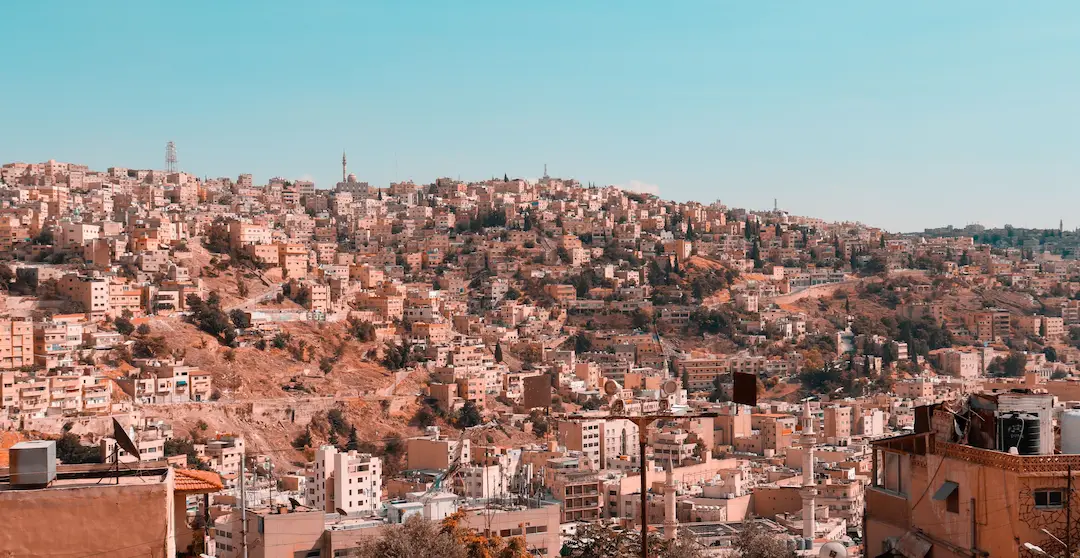
Activities in Fez, Meknes, Moulay Idriss & Volubilis
Let yourself be carried along the most beautiful historical treasures and spiritual places this impressive part of Morocco has to offer.
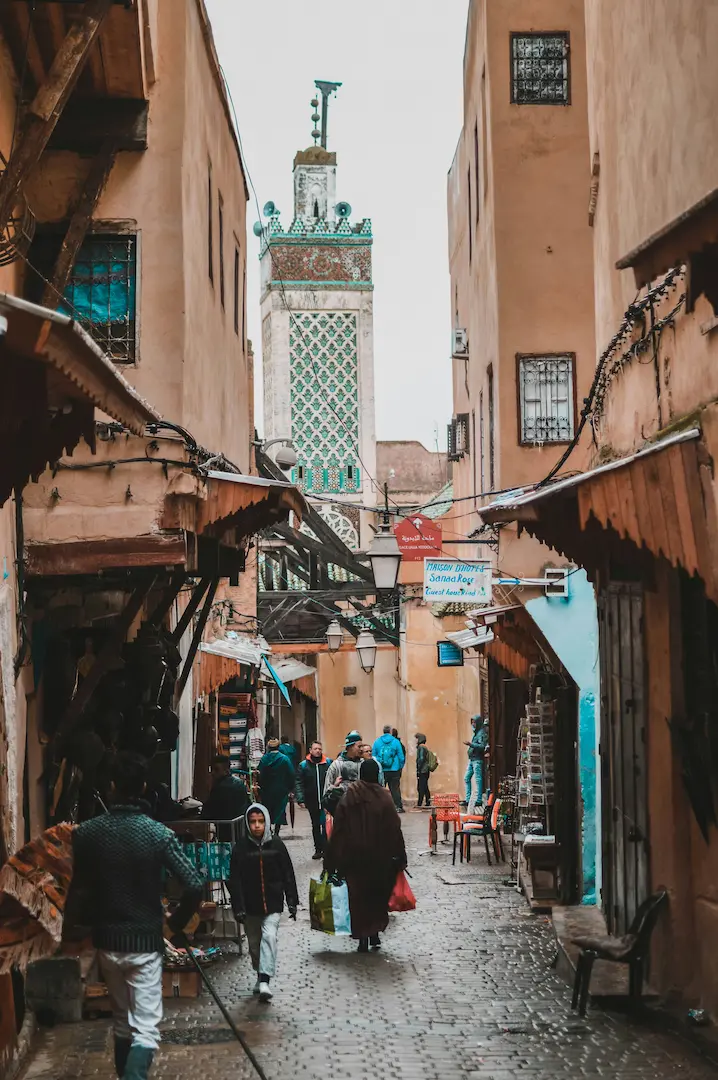
Fez: Wandering through the largest car-free medina in the world
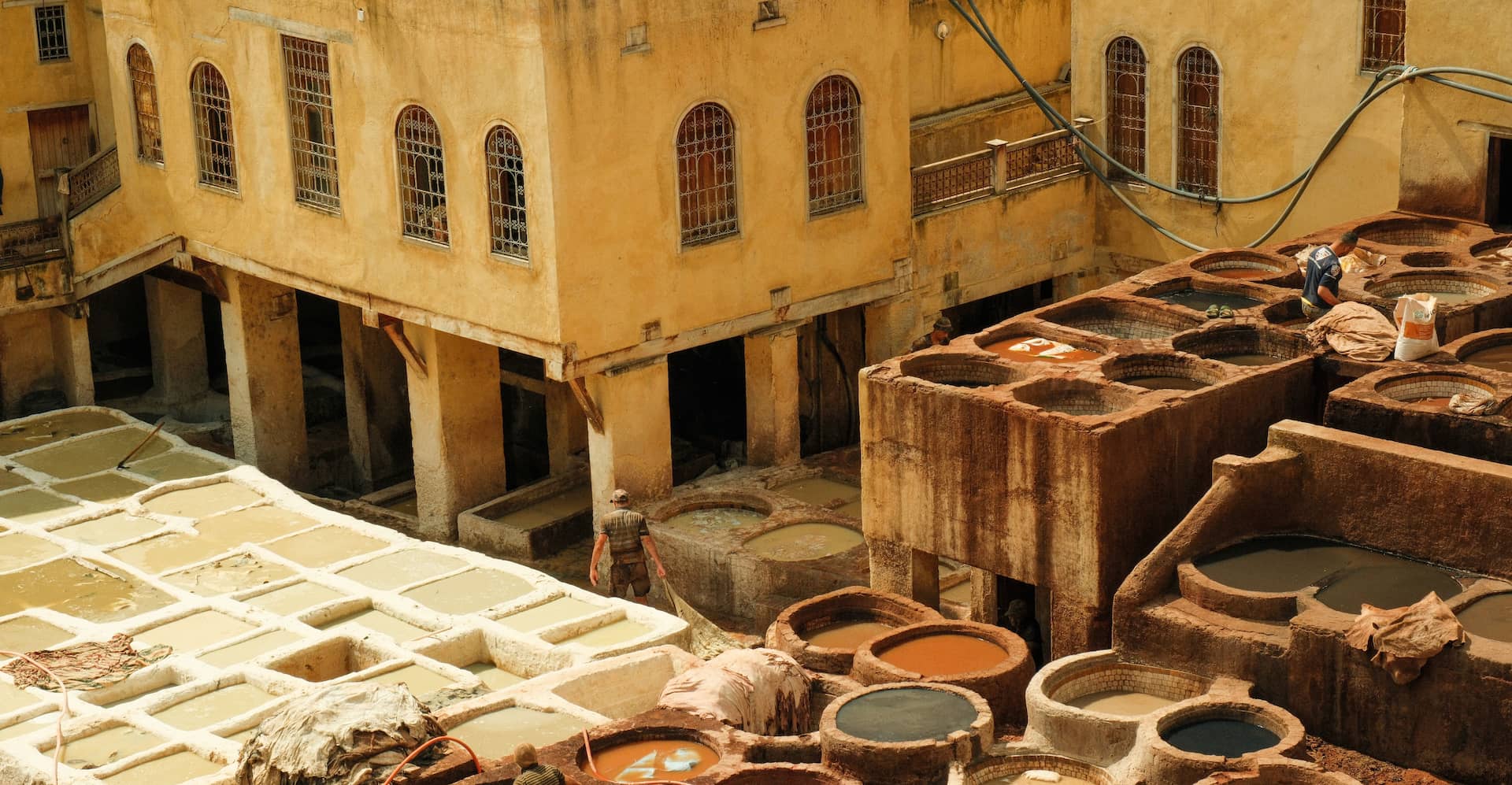
In Fes el-Bali, Google Maps is useless. Navigation gets lost between the nine thousand narrow alleys, and that's exactly the point. You share the route with donkeys carrying heavy rolls of fabric and smell the strong scent of leather at the Chouara tannery.
But instead of wandering aimlessly, you head out with our local partner. Our partners in Fez grew up in this medina and not only know the Quran schools (madrasas) from the inside, but also know exactly behind which inconspicuous wooden door the local women bake the best msemen (Moroccan pancakes). You knock, introduce yourself, and before you know it, you're sitting with a glass of mint tea in your hand, talking about what it's like to live in a car-free maze.
"When you walk through that gate, you immediately imagine yourself in another world. People on the street everywhere... delicious smells and colors of all the food being prepared everywhere. And what is especially special is when you've found a riad and step inside, it's a true oasis of peace. It's so bizarre how you walk through such an extremely busy medina, and as the doors of a riad close behind you, it's just quiet."
-Travel consultant Sjoerd
Meknes: The relaxed and royal alternative to Fez
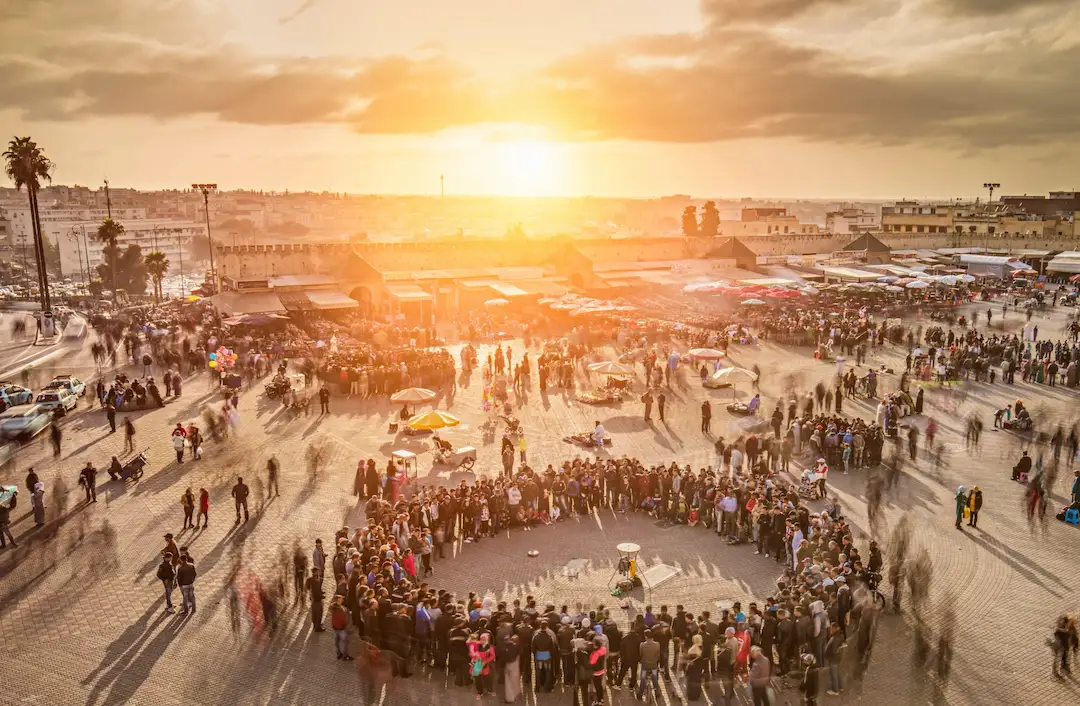
"Everyone runs straight to Fez, but in Meknes, you actually find space," says our travel consultant Sjoerd. Meknes is the imperial city without the hustle. Where you sometimes have to zigzag between pushy salespeople in other cities, Meknes invites you to simply sit and watch.
Walk along the giant walls of Sultan Moulay Ismail and then settle down on the central Place el-Hedim. Order a nous-nous (Moroccan latte) from the waiter who welcomes you with a nod, watch children play soccer against the backdrop of the monumental Bab Mansour gate, and experience how the city slowly transitions from the afternoon rest to the lively evening.
Moulay Idriss: The holy, whitewashed hill village
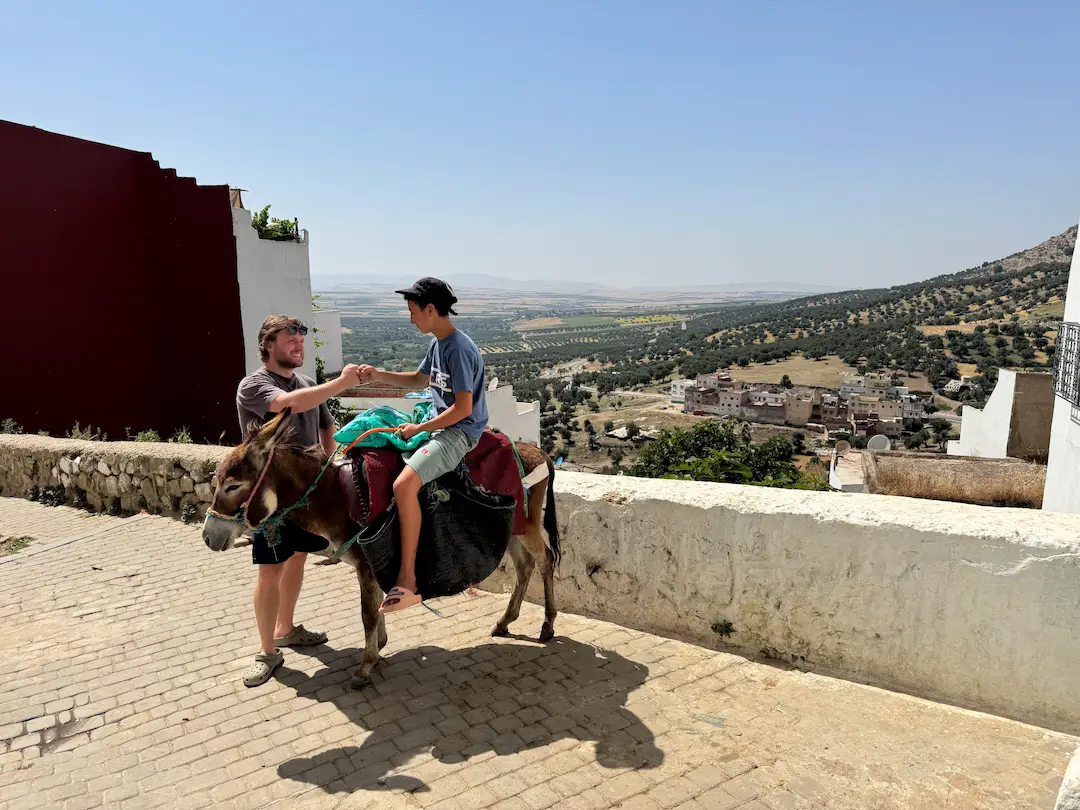
Moulay Idriss Zerhoun is draped spectacularly over two green hills. This holy pilgrimage site was long closed to outsiders, and that authentic, modest atmosphere still hangs there. You don't come here to tick off sights, but to breathe in Moroccan village life.
Walk through the steep, white-and-blue whitewashed streets and follow the scent of warm dough. Good chance you'll end up at the local communal wood oven (ferran), where families bring their homemade dough in the morning. Strike up a conversation with the baker who pulls the bread from the oven with a wooden peel and taste a piece of piping hot, crispy bread. It doesn't get simpler or tastier than that.
Volubilis: Roman splendor and Berber history
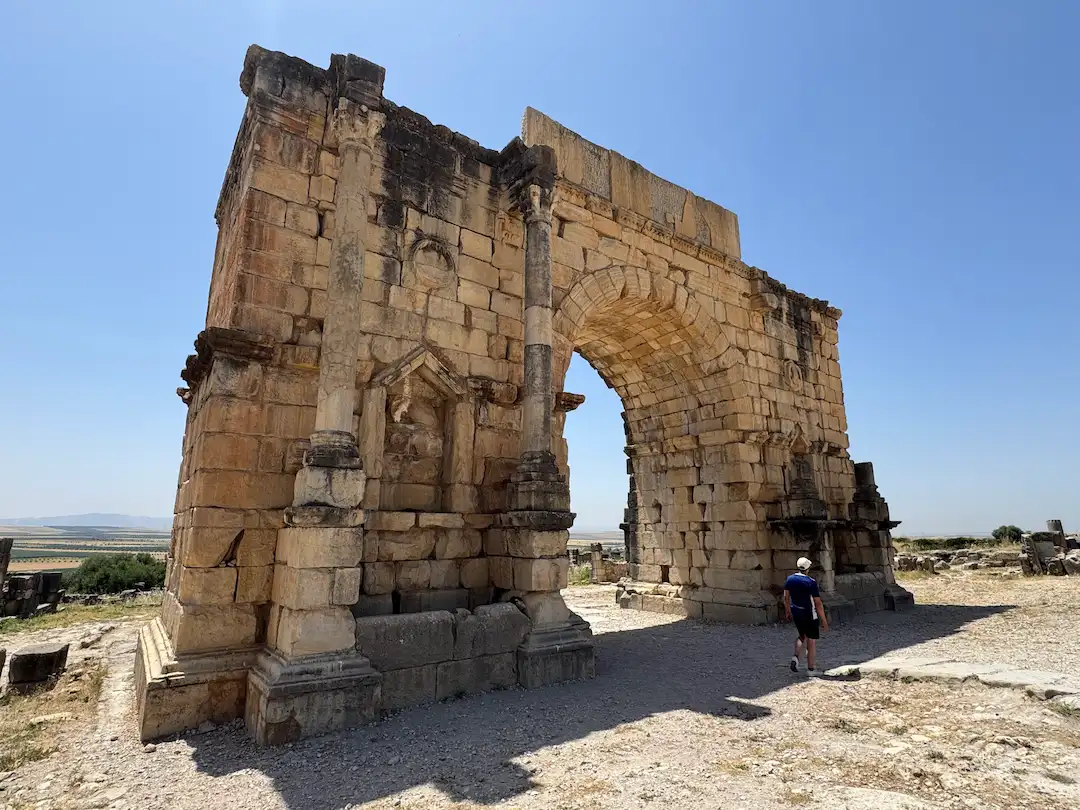
At the foot of the Rif Mountains lie the best-preserved Roman ruins in Morocco: Volubilis (Walili). This UNESCO World Heritage site was once a thriving Roman outpost that supplied the Roman Empire with olive oil and wild animals.
You walk here between triumphal arches and mosaics that have braved the Moroccan sun for thousands of years. Impressive? Absolutely. After you've seen the ancient olive presses of the Romans, we walk on to the surrounding hills. Here you meet Said. He is a modern olive farmer whose family has been working the same land as the Romans did back then for generations. Said shows you how the olives are harvested and pressed today and lets you taste his liquid gold. This is how we connect history directly with the Morocco of today.
“We learned that 20,000 people used to live there and those are excavations from the Roman Empire. It is just really insanely bizarrely well-preserved and you have very beautiful mosaics for example with all kinds of drawings and I found it really very impressive. And the nice thing is actually: you can walk through it everywhere. It's not all covered up like you often see in Europe at excavations, but actually yes, very free and accessible."
-Travel consultant Sjoerd
Charlie's way of travelling
Our team lives and works in Africa
We develop our own routes
Your trip is tailor-made by us
100% insured while travelling
All frequently asked questions about Fez, Meknes, Moulay Idriss & Volubilis
What is the best travel time for Fez, Meknes, and Northern Morocco?
The best travel time for the imperial cities of Fez and Meknes, as well as the archaeological sites of Moulay Idriss and Volubilis, is spring (April through June) and autumn (September through November). During these periods, the temperatures are ideal for walks through the medinas and outdoor monuments.
Season | Months | Climate characteristics | Suitability for cultural trips |
Spring | April - June | 20°C - 26°C, mild evenings | Excellent: Ideal for exploring the ruins of Volubilis. |
Summer | Juli - Augustus | 35°C - 40°C+, dry heat | Moderate: Medina of Fez can feel very hot and stuffy. |
Autumn | September - November | 22°C - 28°C, pleasant | Excellent: Perfect light for photography in Moulay Idriss. |
Winter | December - March | 10°C - 16°C, cool and chance of rain | Fair: Quiet in terms of tourism, but warm clothing is required. |
How do you combine a trip to Fez, Meknes, Moulay Idriss, and Volubilis?
Due to the short geographical distances in Northern Morocco, these four historical locations are easy to combine. You can arrange Meknes, Moulay Idriss, and Volubilis as a day trip from Fez, or include them as consecutive stops during a larger tour through Morocco.
- Distance Fez to Meknes: +/- 60 km (30 minutes by train or 45 minutes by car).
- Distance Meknes to Volubilis & Moulay Idriss: +/- 30 km (30 minutes by taxi or rental car).
- Logistic setup: In one day, first visit the Roman ruins of Volubilis (early in the morning), then make a stopover in the holy village of Moulay Idriss, and conclude the afternoon at the monumental gates of Meknes.
Is a local guide mandatory or necessary in the medina of Fez (Fes el-Bali)?
An official guide is not legally mandatory, but is strongly recommended for the first day in Fes el-Bali. The medina of Fez is the largest car-free urban zone in the world and houses more than 9,000 dead-end alleys, making navigation without GPS or a guide complex.
What dress code applies in the holy city of Moulay Idriss?
Because Moulay Idriss Zerhoun is a respected Islamic pilgrimage site, a conservative dress code applies. Both men and women should completely cover their shoulders and knees while visiting this city.
- Accessibility: The central mausoleum of Idris I is strictly accessible only to Muslims.
- Tourist access: The surrounding streets, panoramic viewpoints, and local markets of the village are completely free and accessible to all international travelers.
What is the best time of day and duration for the Roman ruins of Volubilis?
Allow an average of 2 to 3 hours for a complete visit to the archaeological excavations and the associated museum of Volubilis (Walili).
- Best time: Visit the site early in the morning (08:30 AM) or during sunset. At these times you avoid the bright sun (there is barely any shade among the ruins) and you benefit from the best light for photographing the Roman mosaics and the impressive Decumanus Maximus.
Discover more in Morocco
Or browse through all our unique and authentic experiences

Need travel advice? Ask our Morocco expert Sjoerd
Hungry for the unknown? Our Africa experts have the answers to your burning questions.