Avenue of the Baobabs: The Photogenic Heart of Madagascar
Discover the ultimate highlights of Madagascar. Walk among the ancient giants of the Avenue of the Baobabs and go off the beaten track in search of unique lemur species in the pristine national parks of Andasibe and Ranomafana.
Charlie's Travels | Blog | Avenue of the Baobabs: The Photogenic Heart of Madagascar
Discover the ultimate highlights of Madagascar.
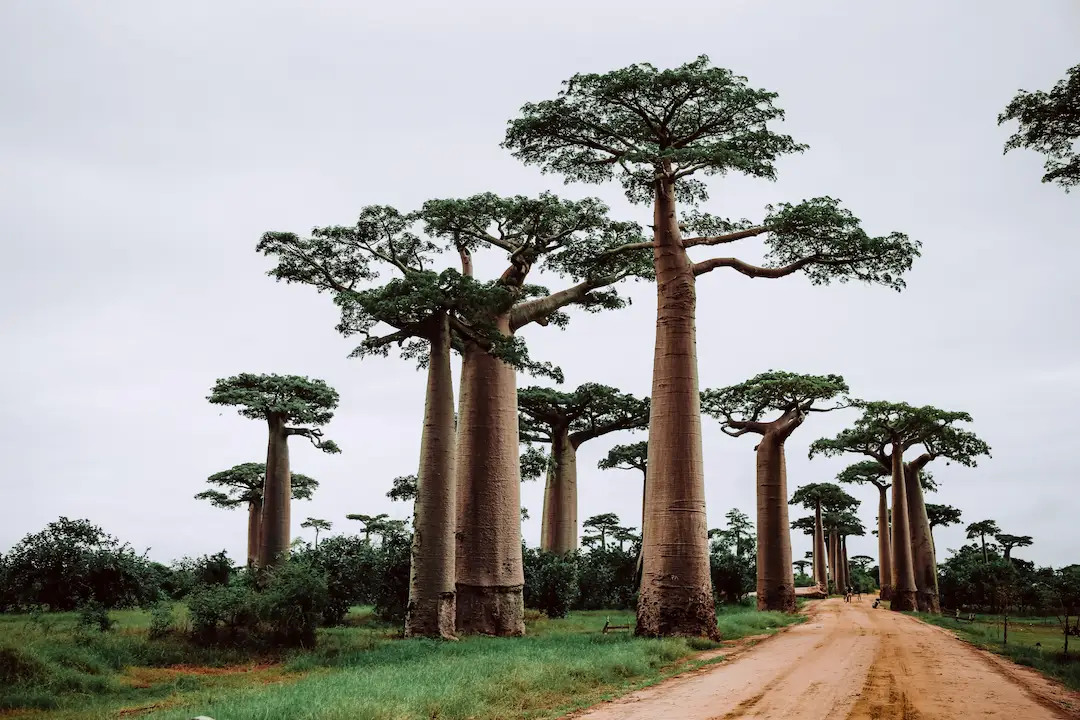
Nothing prepares you for the first time you come face-to-face with the giants of Morondava. The Avenue of the Baobabs is without a doubt one of the most magical and otherworldly places on our planet. These ancient trees, also known as 'upside-down trees' because their branches look like roots, have been watching over the dry landscape of Western Madagascar for hundreds of years. For many travelers, this iconic dirt road is the absolute highlight of their Madagascar vacation.
But how do you get to these imposing giants? And what else can you see? From the lively streets in the capital to the dense, misty rainforests where unique animal species fill the treetops. In this comprehensive blog, we take you to the impressive baobabs in Morondava and the spectacular wildlife hotspots that make your trip complete.
Traveling through Madagaskar | Charlie's Travels
Essential highlights of your tour
This country is massive and diverse. To help you plan your vacation to Madagascar, we have clearly listed the most important highlights and their unique features:
The magic of the Avenue of the Baobabs in Morondava
Located on the west coast of Madagaskar, near the coastal town of Morondava, lies a dusty dirt road that has become world-famous. The Avenue of the Baobabs is a monumental row of approximately 25 to 30 Adansonia grandidieri baobabs, a tree species endemic to the island. These trees reach heights of up to 30 meters and are estimated to be over 800 years old. They are the impressive remnants of the dense, tropical forests that once flourished here before humans arrived.
When you travel here, you absolutely must do it around sunset or sunrise. The contrast between the deep red, burning sky and the jet-black silhouettes of these prehistoric giants is breathtaking. Local farmers trekking across the dusty road with their zebu carts complete the picture. It is a raw, authentic, and unforgettable piece of nature that you will always remember.
Must-visit wildlife spots: Searching for the Lemur
A trip to Western Madagascar is not complete without exploring the lush island sectors. The island's unique biodiversity only truly comes to life when you venture into the dense rainforests to spot the iconic lemur in the wild.
The song of the Indri in Andasibe
From the capital Antananarivo, you can travel relatively easily towards the east to the Andasibe-Mantadia National Park. This is a dense, lush jungle that seems permanently shrouded in a mysterious mist. Andasibe is world-famous because it is home to the Indri, the largest living lemur in the world. This prosimian is known for its impressive, melancholy call that echoes for kilometers through the forest to mark its territory. Together with an experienced local guide, you will leave the beaten track to see these black-and-white giants eating and playing high in the trees. Besides the Indri, the park is also the perfect place to admire the beautiful Diademed Sifaka and various colorful chameleons.
The Golden Bamboo Lemur in Ranomafana
Further to the south, along the iconic Route Nationale 7, lies Ranomafana. This national park consists of steep, mountainous slopes covered with dense tropical rainforest and cascading waterfalls. Ranomafana was established in the 1980s after biologists discovered a brand-new animal species here: the golden bamboo lemur. This rare lemur survives on a diet of bamboo shoots that contain large amounts of cyanide, a mystery that still fascinates scientists. A trek through this park is intense but rewards you with encounters with up to twelve different species of lemurs, including the greater bamboo lemur and the active ring-tailed lemur. After a day of hiking, you can relax in the natural hot springs to which the nearby village owes its name.Lemur in Madagaskar | Charlies Travels
Practical tips for your trip to Madagascar
To get the most out of your trip, it is important to understand the logistics well. The distances on the island are large and the roads are challenging. Below you can see what you can expect from the most important wildlife and nature stops:
Location
Accessibility & Transport
Best time to visit
What to bring?
Avenue of the Baobabs
Accessible via a domestic flight to Morondava or an adventurous 4x4 route.
July to October (just before sunset for the best light).
Sunscreen, a good camera, and mosquito repellent.
Andasibe
About a 4-hour drive from the capital Antananarivo over paved roads.
All year round, but September and October are ideal for active lemurs.
Sturdy hiking boots, a good raincoat, and warm layers of clothing.
Ranomafana
Located on the RN7, easy to combine into a longer road trip to the south.
May to September (cooler and less heavy rainfall).
Waterproof bags for your electronics and hiking boots with good grip.
All your frequently asked questions at a glance
1. How do I get to the Avenue of the Baobabs from Antananarivo?
The most comfortable option is to take a domestic flight from Antananarivo to Morondava, after which it is a short half-hour drive to the baobabs. Alternatively, we organize an adventurous 4x4 road trip, which gives you the chance to experience local life along the way.
2. What is the difference between a lemur and a maki?
Colloquially, the terms are often used interchangeably, but biologically, lemur is the umbrella name for the entire group of prosimians on the island. The maki (like the well-known ring-tailed lemur) is a specific family within this larger lemur family.
3. Is it difficult to hike in the Andasibe and Ranomafana parks?
Andasibe has relatively flat and well-maintained paths, making it accessible to most travelers. Ranomafana is a bit more challenging due to the steep slopes, muddy paths, and dense vegetation.
4. Why are baobab trees so special?
Baobabs can store thousands of liters of water in their thick trunks, allowing them to survive effortlessly in extremely dry climates. Of the eight baobab species in the world, no less than six are found exclusively on Madagascar. They play a central role in local myths and are considered sacred by the population.
5. Is a vacation to Madagascar suitable for culture lovers?
Absolutely! Besides the overwhelming nature, the culture is fascinating. The population consists of 18 different tribes, each with their own traditions, taboos (fady), and rituals (such as the famadihana, the turning of the bones).
My Senegal: Exploring Dakar with guide Mame Diarra Seck
Welcome to Senegal! I am Mame Diarra Seck, and I’ll take you through the rich history of Dakar, Île de Gorée, and our special hospitality.
Dalal jàmm ci Senegaal!
Blog
Raw, Wild, and Untouched: Why a Safari in Zambia Beats the Crowds
Blog
Zambia Beyond the Billboards: Your Ultimate Zambia Travel Guide
Blog
North vs. South Malawi: Which Region Suits Your Road Trip?
Travel Story
Travel Story: Angola through the eyes of Pioneer Hanneke
Just like you, we love a dash of adventure, and like a good safari guide, cookies make sure you experience our site to the fullest. Accept Cookies? Asante sana! Then you help us to keep improving our website. No cookies? Then your data goes Off the beaten track and we can't improve the experience on our website for other travellers.
Functional
Always active
The technical storage or access is strictly necessary for the legitimate purpose of enabling the use of a specific service explicitly requested by the subscriber or user, or solely for the purpose of carrying out the transmission of a communication over an electronic communications network.
Preferences
The technical storage or access is necessary for the legitimate purpose of storing preferences that are not requested by the subscriber or user.
Statistics
The technical storage or access that is used exclusively for statistical purposes.The technical storage or access that is used exclusively for anonymous statistical purposes. Without a subpoena, voluntary compliance by your Internet Service Provider, or additional data from a third party, information stored or retrieved solely for this purpose cannot usually be used to identify you.
Marketing
The technical storage or access is necessary to create user profiles for sending advertisements or to track the user on a website or across multiple websites for similar marketing purposes.