Wild camping in Angola
Forget fenced campsites with numbered spots, power hookups, and a barrier that closes at ten in the evening. In Angola, you pitch your tent where the road stops and nature takes over. From sleeping on a village football field in the mountains to waking up in the absolute silence of the Namib Desert: this is camping without a filter.
Why Angola is the place for wild camping
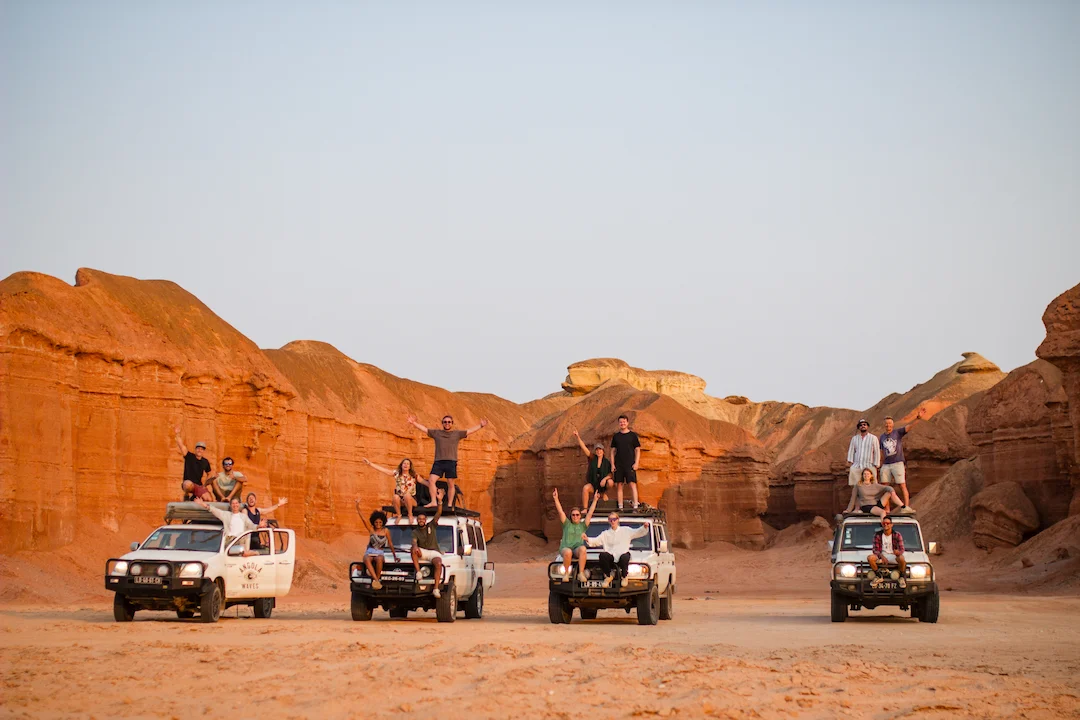
When our Charlie’s Angels Anna, Stephanie, and Sjoerd traveled through the country with 7 travelers in a rooftop tent last year, they quickly found out: formal campsites barely exist here. And that is exactly the point. This country is still completely its own. That means the most beautiful spots have no reception, no Wi-Fi, and no neighbors.
Wild camping here is not only the norm, it is the key to the country. The starry skies in the desert are so clear they leave you speechless, and the only people you encounter are the locals who welcome you with a wide smile. This is travel for those who dare to trust their compass and local hospitality.
Where is the best place to camp in Angola?
From the mysterious black boulders in the north to the bone-dry desert in the south: these are the places where we prefer to light our campfire.
Camping at the foot of Pedras Negras
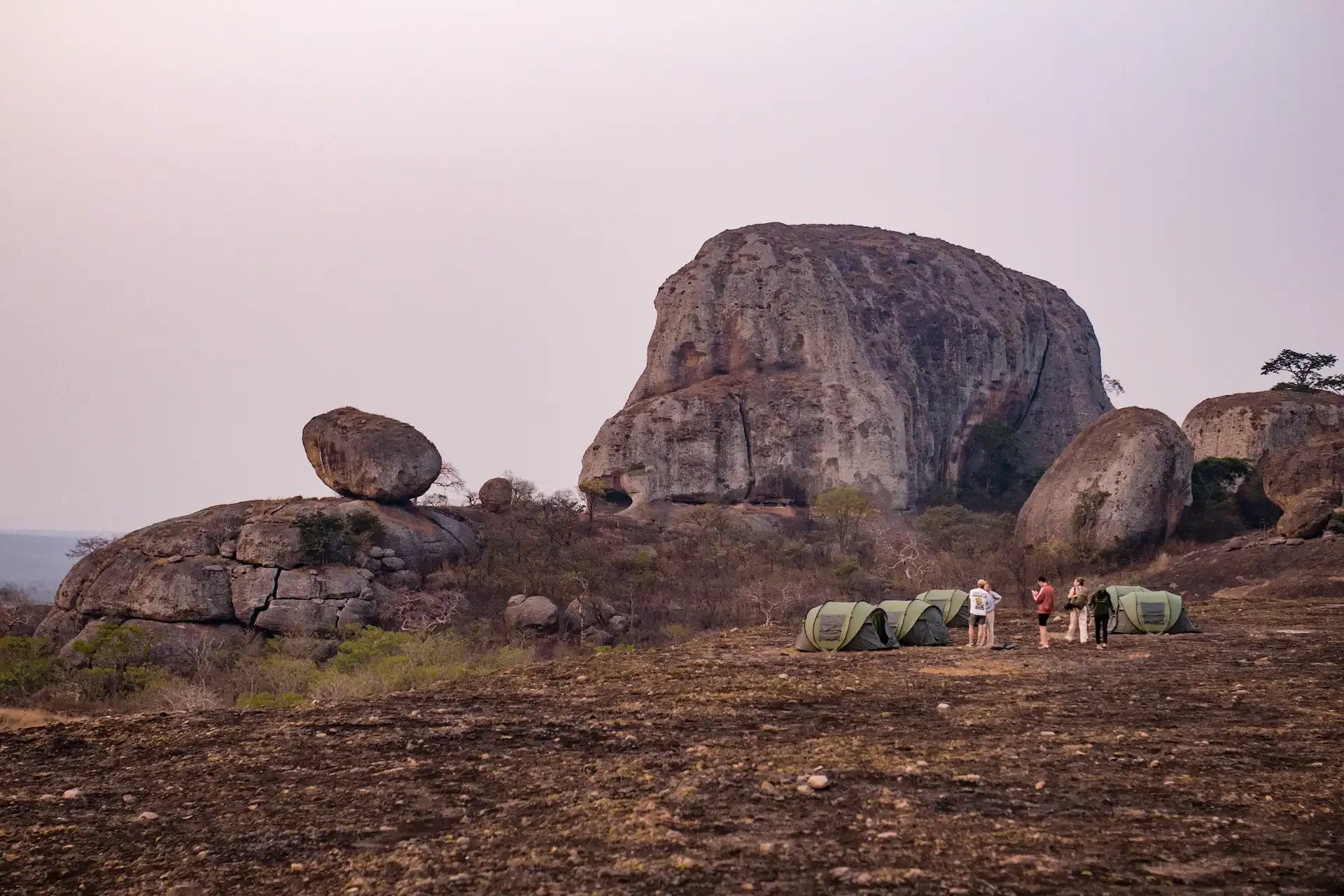
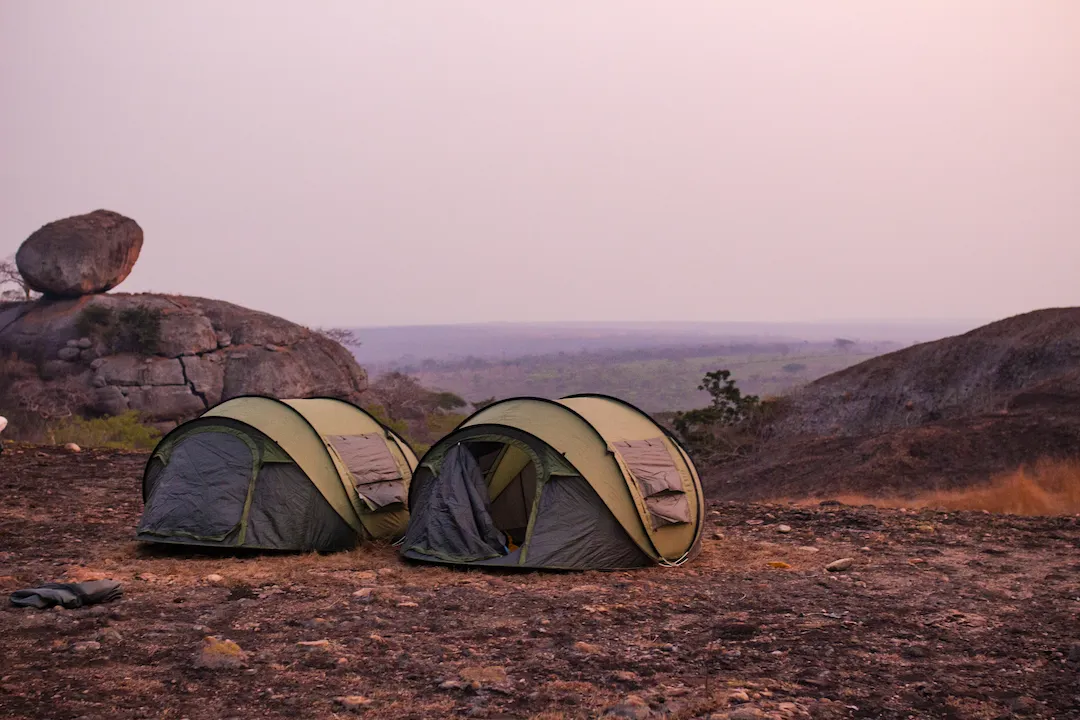
Imagine this: you unzip your tent and look straight up at the sheer, jet-black rock walls of Pungo Andongo. No fences, no other tourists, just the wind through the savanna. Together with our guide Faustino, you gather dry wood for the campfire as the sun sets behind the granite monoliths.
Faustino tells the stories of Queen Nzinga, who once defied the Portuguese here, while the rocks stand as giant guards over your camp. A thick sleeping pad is not a superfluous luxury here, by the way, because the ground is hard and unforgiving.
Sleep where the world ceases to exist: The Namib & Iona
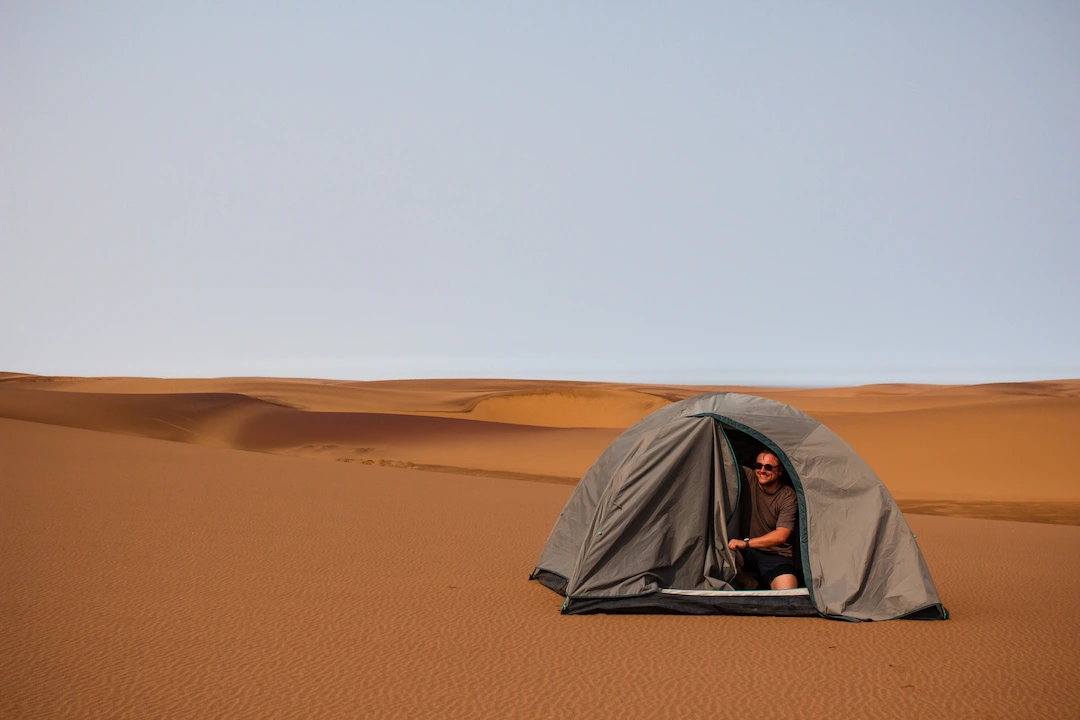
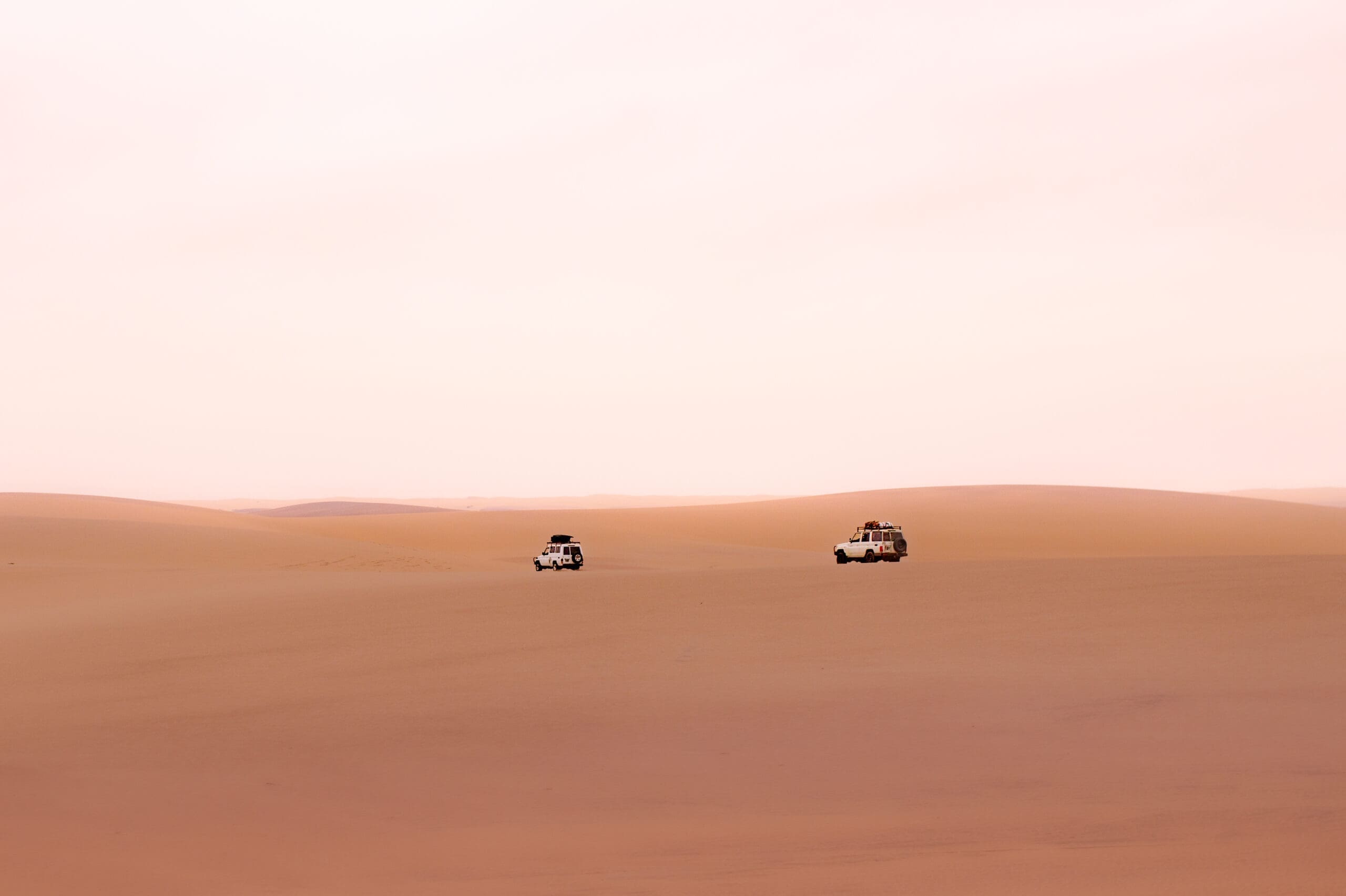
In the deep south of Angola, civilization slowly ceases to exist. Here, where the golden-yellow dunes of the Namib Desert transition into the Atlantic Ocean, we set up camp in absolute emptiness.
Without a trace of artificial light, you can almost touch the Milky Way from your rooftop tent. While the coffee simmers on the burner in the morning, you see a group of oryx migrating over the dunes in the distance. This is not a comfortable vacation; this is an expedition.
Your tent among the locals
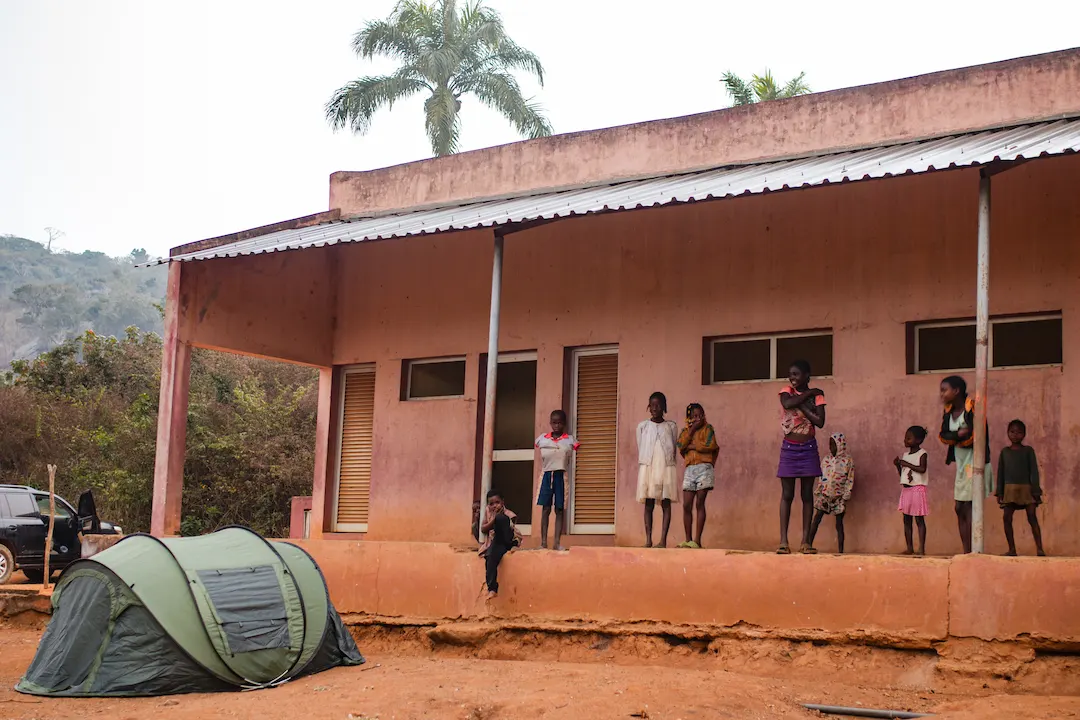
On the slopes of Morro do Moco, we do things differently. No lonely bush, but human connection. In the mountain village of Kanjonde, we set up our camp right on the local football field. Soba (village elder) Bernardo officially welcomes us, and in no time, the children from the village are playing a fierce game of football around your tent.
As the sun sets behind the green mountains, you share a meal with the residents. You quickly realize that you don't need to speak Portuguese to understand each other by the campfire. The next morning, you start the climb to the highest peak in Angola with a local guide.
Camping next to a waterfall
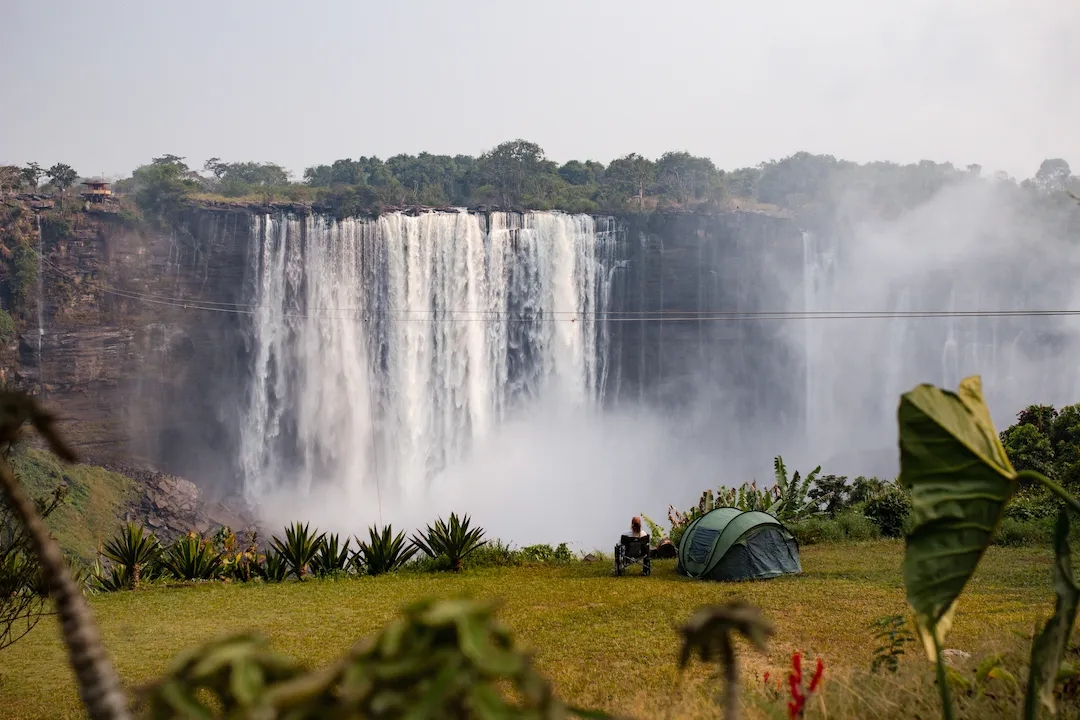
Who needs Spotify when you can fall asleep to the sound of one of Africa’s largest waterfalls? At the Calandula Falls, we camp on a cliff with a direct view of the roaring Lucala River.
You sleep with the fresh mist on your tent canvas and wake up as the first rays of sunshine break through the vapor. Even before the few day-trippers arrive, you descend with guide Lucas via a steep, slippery path to the foot of the waterfall for an ice-cold morning dip.
Charlie's way of travelling
Our team lives and works in Africa
We develop our own routes
Your trip will be tailor-made
100% insured and travel in safety
All your frequently asked questions about hiking in Angola
Is wild camping in Angola safe?
Yes, provided you adhere to the unwritten rules. The most important rule in Angola: never camp just anywhere without permission. We always check in with the local Soba (the village head) or the nearest farmer.
This is not only polite, it also ensures you are regarded as a guest instead of an intruder. Angolan hospitality does the rest.
Do I need a 4x4 to camp?
Without a doubt. The most beautiful camping spots are at the end of deep sand paths, rocky tracks, or roads full of potholes where a normal car would immediately get stuck. A sturdy four-wheel drive with high ground clearance is your lifeline here.
Do I have to bring all my own gear?
Angola does not have outdoor stores around the corner. You must be completely self-sufficient. Fortunately, we arrange for your 4x4 to be fully equipped: from an iron-strong rooftop tent and warm sleeping bags to a cooking set, cool box, and a decent axe for the campfire wood.
What about hygiene while wild camping?
Do not expect warm showers or toilets. In the bush, you are on your own. That means: showering with a jerrycan, using biodegradable soap, and digging a hole for your needs (and yes, you take your used toilet paper back with you in a garbage bag).
What is the best time to go camping?
The dry season (the cacimbo) from May to October is perfect. The roads are easily accessible and the chance of rain is minimal. Be prepared for ice-cold nights in the Namib Desert and the highlands; as soon as the sun sets, the temperature can drop sharply. A good sweater and warm sleeping bag are gold.
Discover more about Angola
Or browse through all our unique and authentic experiences
Nyerere National Park
Nyerere National Park is de perfecte plek om te dwalen in Afrika’s grootste wildpark. Het diverse landschap, langs brede rivieren en uitgestrekte vlaktes zonder andere toeristen maakt safari hier weer een ontdekking.
Tanzania: het noorden versus het zuiden
Noord of Zuid Tanzania? Ontdek de verschillen in safari, natuur, drukte en beleving. Van iconische parken tot puur off the beaten track reizen.
Off the beaten track door het wilde zuiden van Tanzania
Ontdek Zuid Tanzania met hikes, lokale ontmoetingen, safari en Swahili kust. Een avontuurlijke route ver weg van de massa.
Need travel advice? Ask Angola expert Anna
Fancy exploring the unknown? Our Africa experts have the answers to your burning questions.