We won't reveal how the movie ends!
First, a little trailer...
The film is about Karen Blixen, the woman who, looking back ("I had a farm in Africa"), tells the story of her life. She is brought from Denmark as an unmarried rich girl to marry the also wealthy Baron Bor Blixen. However, the marriage is more of a duty, and the man gives her syphilis, so you can guess what's coming: she eventually develops feelings for the heroic daredevil Robert Redford, aka Denys Finch Hatton. It's all too good to be true, of course, but we won't spoil how the movie ends.
Yes, right next to this, you'll see that famous snippet, right at the beginning of the film! This is exactly the sentence with which Karen Blixen's
Out of Africa book also begins. The movie is loosely based on that book. Interestingly, though, the film paints a hopelessly romanticized picture of who Karen Blixen really was. There's also quite a bit to critique about the film. Before we go any further: go watch the movie if you haven't seen it yet! If you're planning a trip to Kenya, it's a must-see. After this, we're going to share some spoilers, and the movie might lose some of its luster. Alert!
Ready for the spoilers?
1. The phrase on the grave
Meryl Streep starts with the line "I had a farm in Africa, at the foot of the Ngong Hills" (a very beautiful location in the Great Rift Valley, where you can stay with Charlie’s Travels!). The line "He prayeth well that loveth well both man and bird and beast" comes from
The Rime of the Ancient Mariner and is engraved on Finch Hatton’s grave, which you can still visit today. Finch Hatton tragically crashed his plane...
2. Blixen's life in Africa was actually much more unpleasant than portrayed in the film
Karen Blixen had a tough time on her 'farm in Africa'. For example, a massive locust plague was not included in the film, several shootings were left out, and the parts of Blixen's book about the German army were conveniently skipped. Additionally, Karen Blixen's land was much larger than the film suggests. She owned about 16 square kilometers of land, which stretched from Champagne Ridge to the present-day Karen area.
3. That romantic chapter was quite different in real life
In the film, Denys and Karen meet on the savannah, but in reality, they first met at the British colonial hunting club. Of course, that doesn’t quite fit the romanticized version. Furthermore, Denys disappeared for two years on a military mission in Egypt, and Karen had several miscarriages, which are not shown in the film.
4. That American Redford is supposed to represent an aristocratic Brit
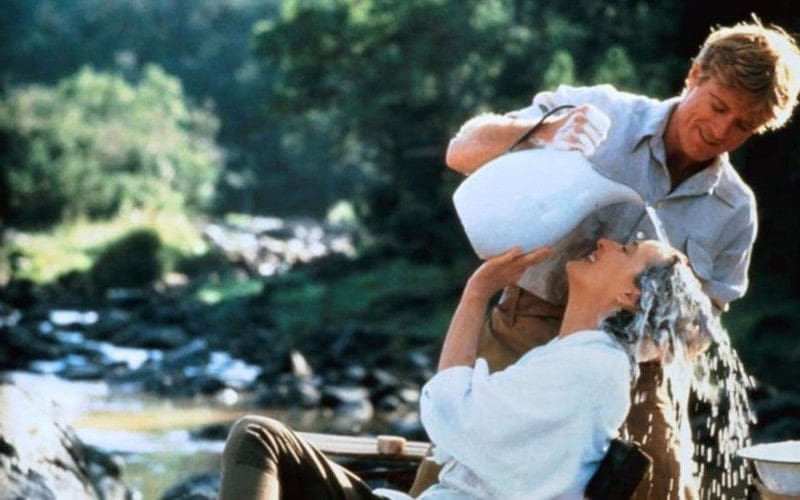
In
Out of Africa, the American actor Robert Redford plays the role of Denys, a super-posh Brit who definitely didn't behave (or speak) like an American cowboy. This is how Redford plays the role, despite knowing he was supposed to portray a Brit. Apparently, director Pollack and Redford discussed that Redford should speak with a British accent, but they decided that it would be too distracting, so they went with Redford speaking in his American English. Yeee-haw!
5. The book is racist, and the film is neo-colonial
It’s true that
Out of Africa is set during the time when Kenya was a British colony, but that doesn’t mean the film needs to adhere to all the skewed and cruel power dynamics from that era. Karen Blixen was notably racist (a subject of extensive
study), and in her book, she refers to the Kikuyu and Masai tribes as “primitive,” likening them to “a herd of sheep” incapable of independent thought. She also claims that the “natives have no sense of taste or contrast” and lack humor, describing them as “like a hard stone.” While those views are thankfully not depicted in the film, Kenyans still play an alarmingly minor role, further reinforcing the colonial lens.
The film received a whopping seven Oscars but was poorly received by critics. It is one of the few films to win so many Oscars (and also nominated for four other Oscars) while simultaneously being poorly received by film critics. On review aggregation site Rotten Tomatoes, the film holds a modest 57%. If, after reading this piece and watching the film, you're still curious to learn more, you can visit the museum located in the Karen neighborhood named after Karen Blixen. However, it's recommended to read this
article from Quartz carefully—it provides important context.
Influence on your Kenya trip
Out of Africa shows a romanticised version of Kenya, but it is absolutely not an accurate representation of what the country feels like today. If you watch the film before travelling, it helps to know that modern Kenya is completely different, and thankfully so. Nairobi is a vibrant African metropolis full of diversity. The Ngong Hills are still stunning but far more accessible, especially for Kenyans. The country is full of innovative young entrepreneurs who have nothing to do with the colonial narrative.
You are not travelling through a movie set but through the Kenya of today. A land full of lively cultures, street art, amazing food, inspiring stories and nature that you experience far from the tourist crowds. When you see the film in the right context you understand much better what is happening in modern Kenya and you travel more consciously.
Aftershocks of colonial history
Unfortunately the (neo) colonial aftermath is still very present. The debate around the JW Marriott hotel in the Maasai Mara shows how sensitive land rights and decision making remain in Kenya. Local Maasai communities protested because they had no real voice in decisions about their own territory. Issues like this clearly show that colonial history has not simply ended but continues to shape tourism and economic power today. As a traveller you can actually make a positive difference by choosing local guides, community owned lodges and initiatives that truly come from within the community.
Choose local Kenyan partners
This is exactly why travelling with people who live and work here is so valuable. Local guides, small lodges, community projects and family run businesses decide for themselves how tourism impacts their land. They show you the real Kenya, not the romanticised Hollywood version or the all inclusive fly in safari concept of the luxury hotel chains. When you choose local partners your money goes directly to the communities who protect the land and carry the stories. It makes your journey more personal, fairer and infinitely more meaningful than any luxury lodge could offer.
Background information on Kenya
Kenya is a country with many layers. As mentioned earlier, Nairobi is dynamic and buzzing, but the moment you leave the city you enter a completely different world.
Rich cultural background
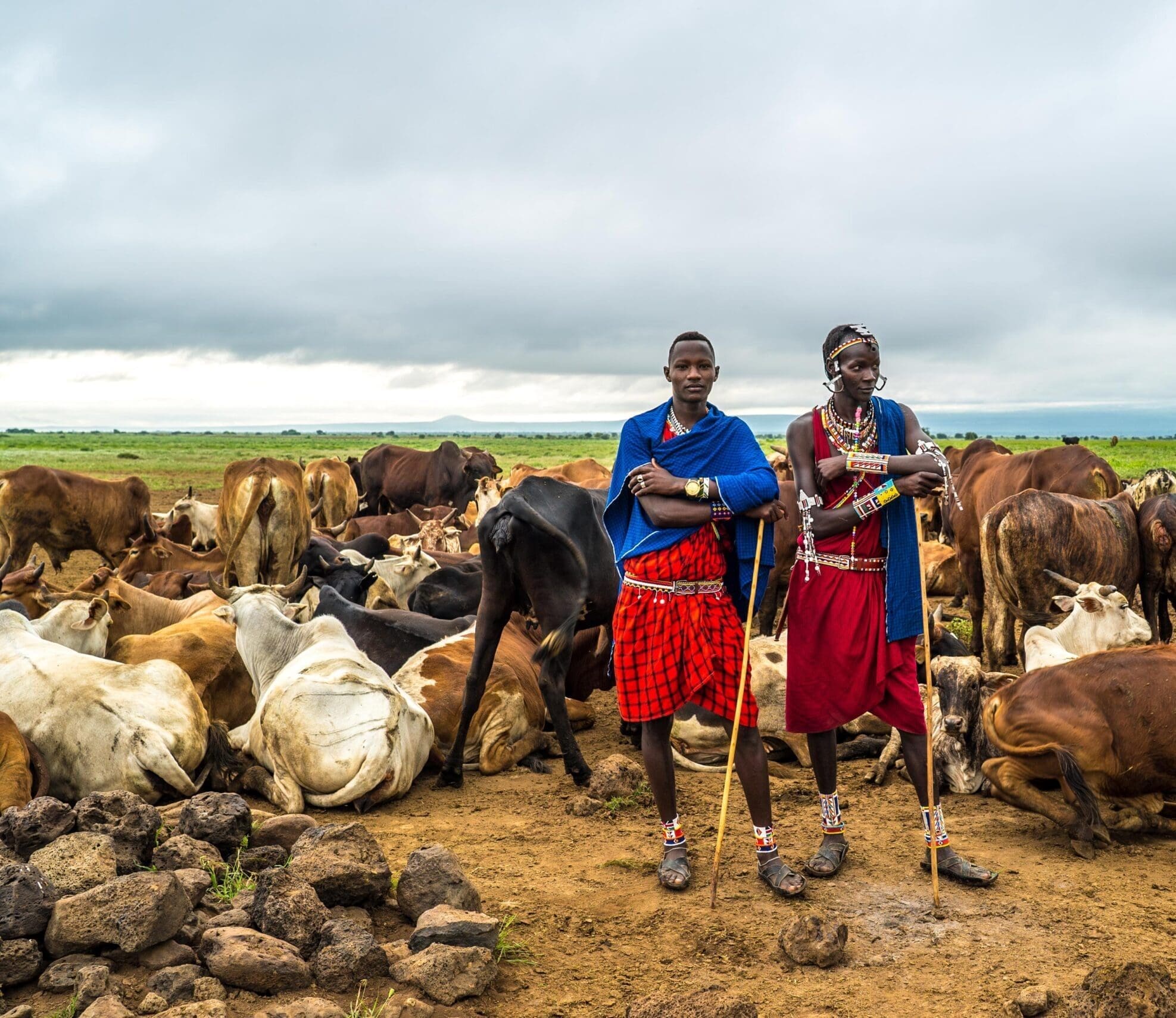
When you travel inland you move through the territories of the Maasai, Samburu and Turkana, communities with their own rhythms, stories and traditions. You see how nature and culture are intertwined, especially in the conservancies that are run by the communities themselves.
The Swahili coast, relaxing by Lake Victoria and scorching deserts
Travel further and you notice just how diverse the country is. The Swahili coast feels entirely different from the interior, with traditional dhows, food influenced by all corners of the world, relaxed villages and stunning beaches. In the west near Lake Victoria everything is greener and calmer. In the north the landscapes are rough, empty and magical with volcanoes, deserts and the vast Lake Turkana. Wherever you go, Kenya changes constantly, but one thing stays the same everywhere. The openness, pride and hospitality that make the country so beautiful.
FAQ
How realistic is the film Out of Africa?
Out of Africa is beautiful to watch but shows a romanticised, western perspective of Kenya. The landscapes are mostly accurate but the social structures, colonial context and the role of Kenyans are oversimplified or ignored.
Do the characters and relationships match reality?
The characters are based on real people but their stories are heavily dramatised. Many complex historical and social layers were removed to make the story more romantic. The real context was far harsher and more complicated.
Can you still visit the locations from Out of Africa?
The Ngong Hills are still a stunning place to hike and lie just outside Nairobi. Some houses and farms from that era still exist in altered form, but many scenes were filmed elsewhere or built as sets. A modern trip through Kenya feels nothing like the film. You can visit the Karen Blixen Museum, which is the original house she lived in.
Why is Out of Africa controversial?
The film is criticised for romanticising a colonial past and marginalising African characters. It fits into a broader debate about who tells the story and whose perspectives are missing, something still very relevant in tourism today.
How do I watch the film with the right context before travelling to Kenya?
See it mainly as a Hollywood classic with beautiful scenery, not as a guide to the country. Knowing the history, the current debates around land rights and the experiences of local communities helps you understand modern Kenya far better. It makes your journey richer and more honest.