




Off-roading through the Anti-Atlas: Tafraoute, the Aït Mansour gorge, and the citadels of Amtoudi
Dusty tracks, pink granite boulders lighting up in the afternoon sun, and a vibrant green oasis suddenly appearing amidst dry rocks. This is the Anti-Atlas through our eyes.
No souks, just raw rocks: Welcome to the Anti-Atlas
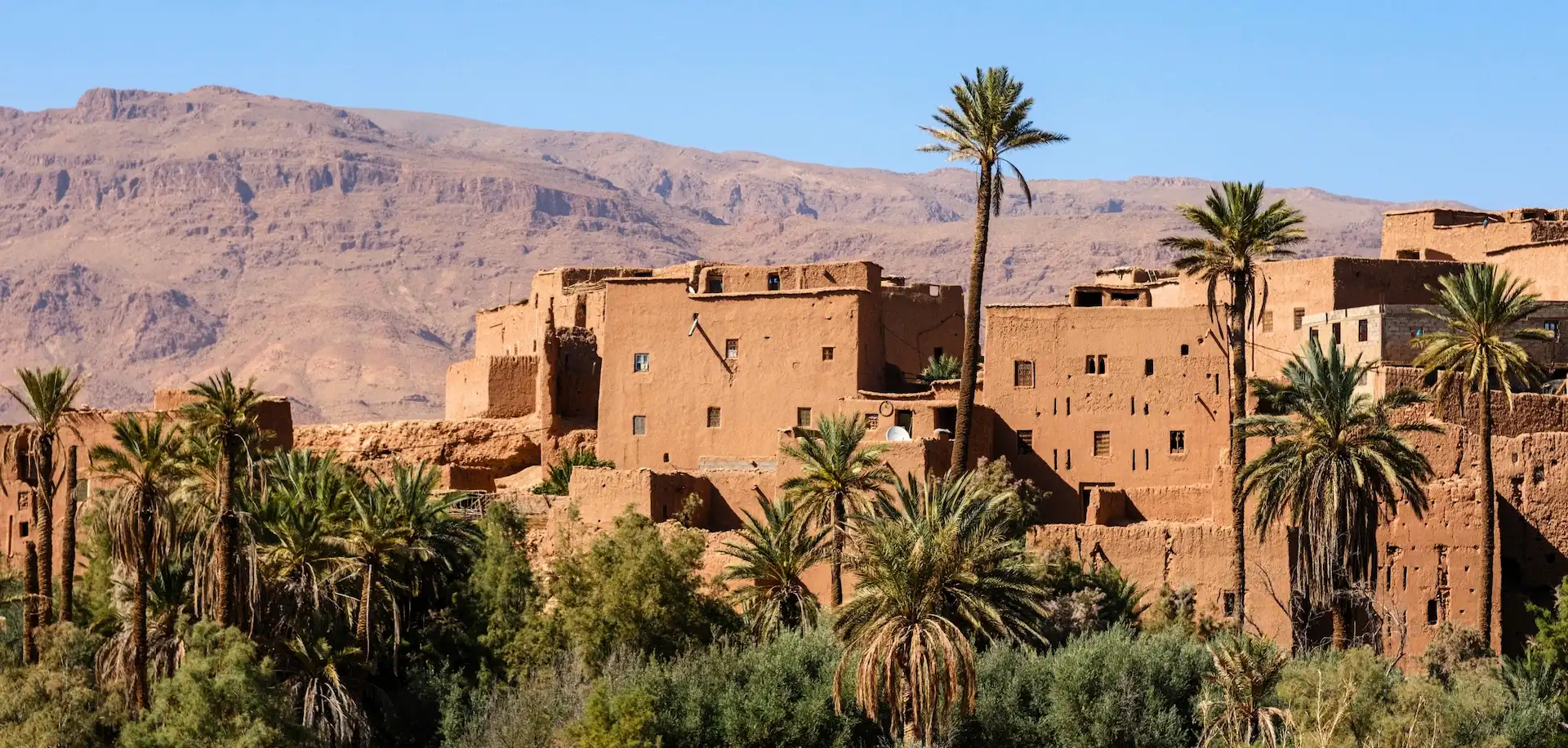
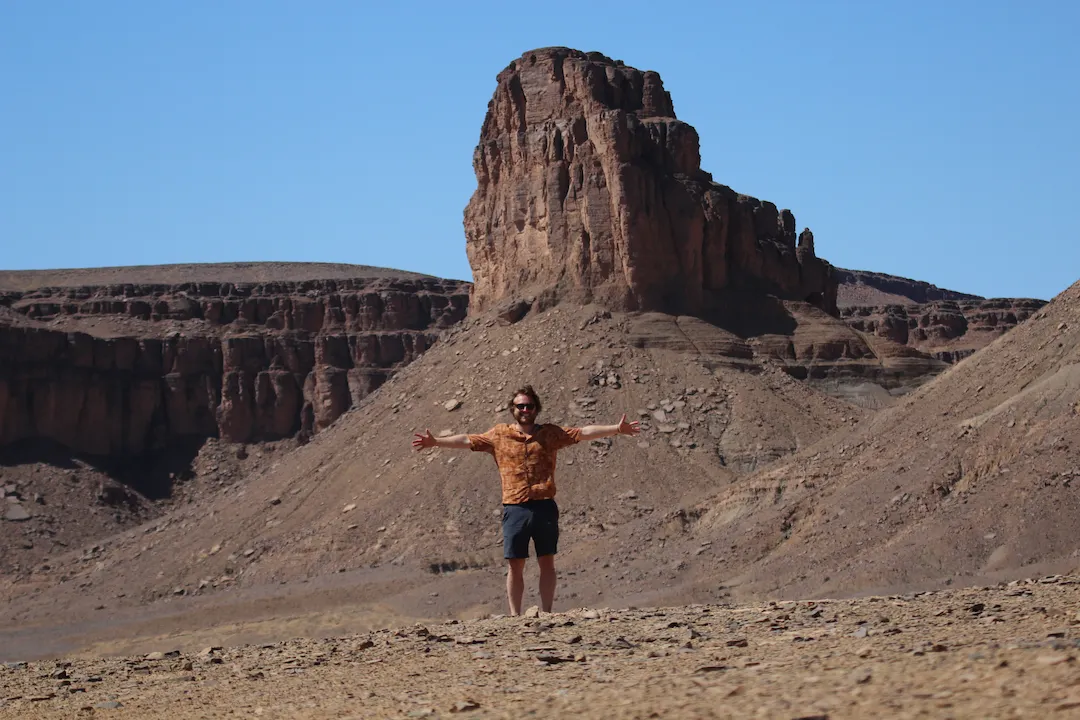
In the southwest of Morocco, you'll find the Anti-Atlas: a rugged, sun-drenched mountain range where the mountains look like they were stacked by a giant child. Our travel consultant Sjoerd headed into these mountains and couldn't believe his eyes.
Sjoerd shares: "At first, we saw a completely different kind of mountain than what we’d seen so far. It looked almost man-made, with all these levels—really bizarre. We were constantly amazed by how beautiful everything was."
Together with our local partner Hafid, we have mapped out a route that leads you straight through this unknown territory. No tour buses, just dusty 4x4 trails and encounters with the people who live here.
Activities in the Anti-Atlas
Leave the beaten path behind and discover Southern Morocco the Charlie’s way: active, raw, and with the wind in your face.
Off-roading through the spectacular Aït Mansour gorge
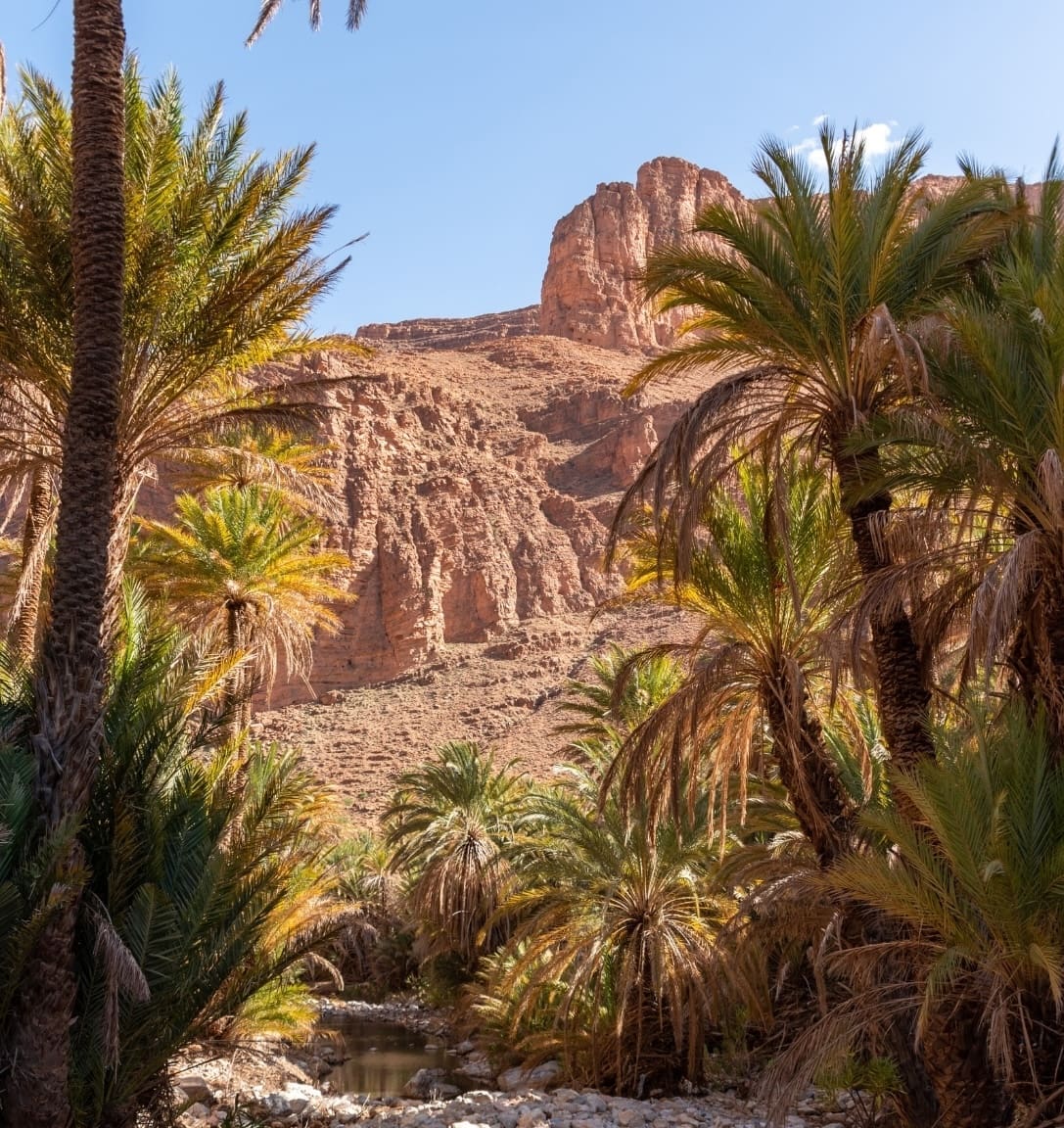
You drive along the P1927, a road that winds through a bone-dry, rocky no-man's-land. Dust kicks up behind the 4x4, the sun beats down on the metal, and then suddenly, after a sharp turn, you descend into a deep gorge. All at once, you find yourself in a dense, vivid green jungle of thousands of palm trees.
Sjoerd drove this route recently and was deeply impressed: "We got on at Afla Ighir, then went through Aït Mansour and the gorge. I really don't understand it. It is so incredibly beautiful. You have one long, huge, stunning oasis there. This was genuinely the most beautiful road trip of my life. Not just this part, but everything around it."
With the 4x4 from our local partner Hafid, you’ll bump along the unpaved tracks. No smooth asphalt, but the real deal.
Mountain biking past the pink granite of Tafraoute
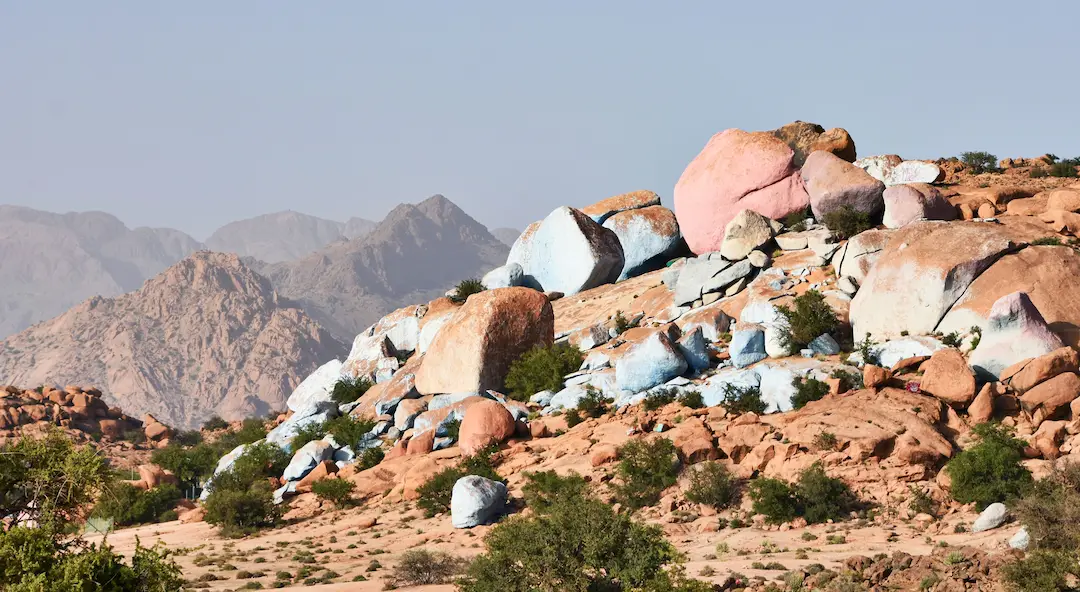
Tafraoute is nestled between gigantic, pink and gold-colored granite boulders that look like they were placed there by an alien force. Here, you will meet Mustapha, a local mountain legend who knows every path in this region like the back of his hand. He’ll put you on a mountain bike and lead you along dusty single tracks, passing sites like 'Les Rochers Peints' (The Painted Rocks), a work of art featuring blue-painted rocks in the middle of the desert.
Our travel consultant Sjoerd describes the village as a wonderful home base: "The most beautiful mountain village in Morocco, set right in the middle of the granite rock formations of the Anti-Atlas. The village has a delightfully relaxed vibe, great accommodations in the area, nice terraces, and a number of tasty restaurants."
Climbing to the fortifications of Amtoudi
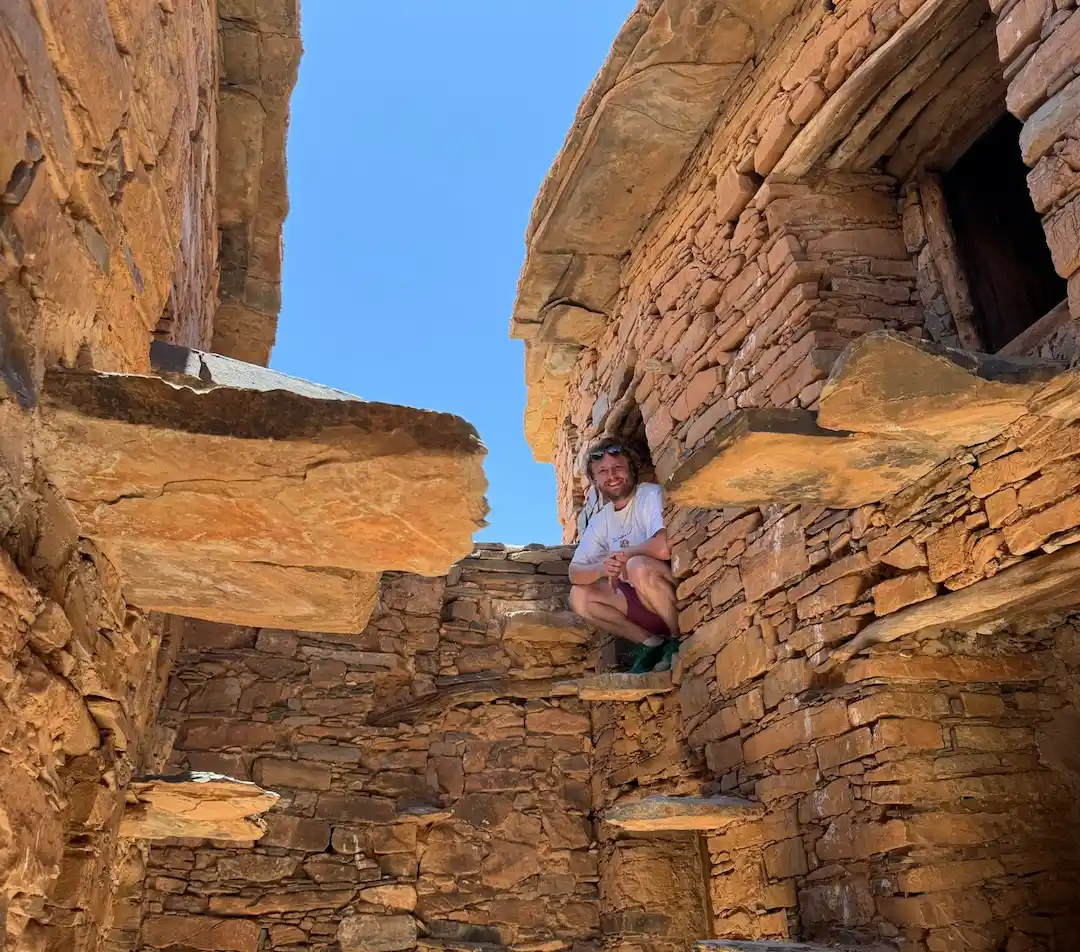
Amtoudi is a place most travelers drive past quickly. That’s a shame, because this is where you’ll find the 'agadirs': centuries-old, fortified granaries that balance like stone nests on the edges of steeps cliffs. Together with a local guide, you will walk up through the shady gorge to Agadir Id Isa.
It is a tough climb over loose stones, but once at the top, you immediately understand why the Berbers stored their harvest here: the fort is impregnable, and the view over the dry valley is vast and silent. This isn't an open-air museum; it's living history.
No star hotels, but sleeping in the Kasbah
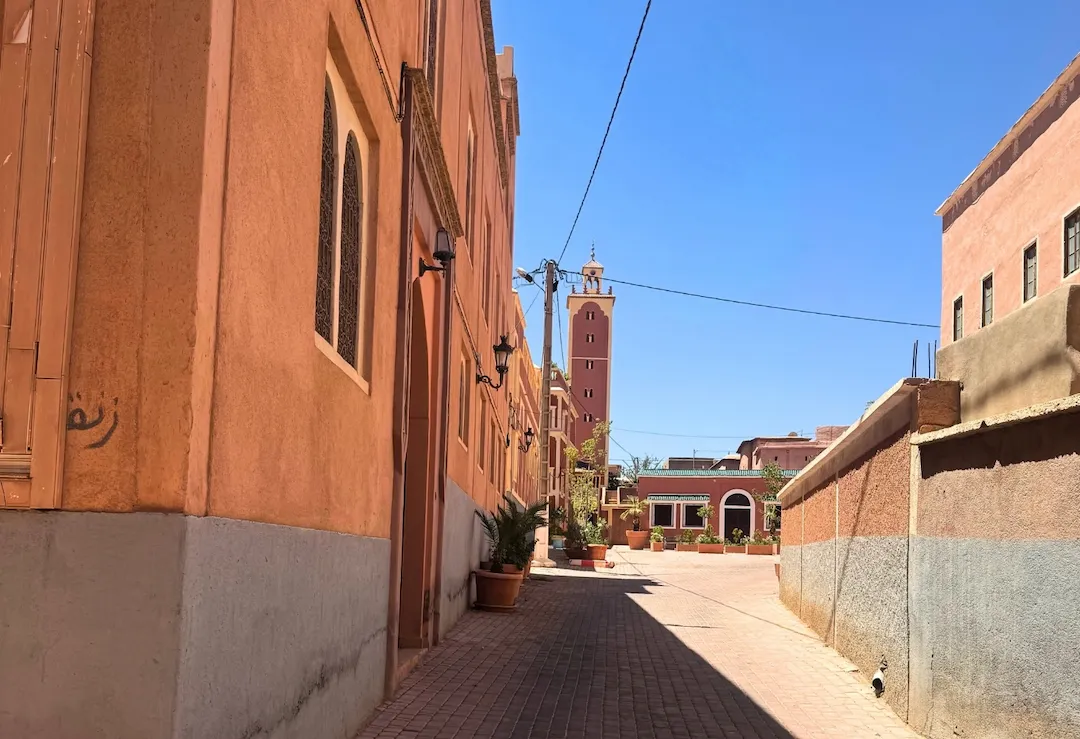
After a day full of inhaling dust and bumpy roads, you’ll pull up a chair in a restored mud-brick Kasbah or a small-scale eco-lodge run by a local family. Don’t expect anonymous hotel lobbies or waiters in stiff suits here. Instead, you’ll flop down on a Moroccan rug, drink hot mint tea with the owner, and eat a steaming tagine that has been simmering for hours.
Sjoerd felt right at home here because of the hospitality of the locals: "The people here are so warm, welcoming, and friendly. It is amazing."
These are not scripted encounters for tourists; these are the families our local partners have been working with for years, and who are proud to show you their piece of Morocco.
Charlie's way of travelling
Our team lives and works in Africa
We develop our own routes
Your trip is tailor-made by us
100% insured while travelling
Frequently asked questions about the Anti-Atlas
Do I need a 4x4 vehicle for the Anti-Atlas?
Yes, a 4x4 vehicle is necessary for the unpaved off-road tracks in the Anti-Atlas. For the paved main roads, a regular car is sufficient.
- Off-road routes: A 4x4 is required on tracks like the route from Foum Zguid via the Aït Mansour gorge to Tafraoute due to rocks and gravel.
- 4x4 Service with driver: Charlie’s Travels offers the option to leave your regular rental car at the edge of the desert, after which a professional local driver takes over for the off-road tracks.
What is the best time to travel to the Anti-Atlas?
The best time to travel to the Anti-Atlas is in the spring (March to May) and autumn (September to November). During these periods, temperatures are optimal for outdoor activities.
Season | Months | Features & Activities |
Spring | March – May | Ameln valley is in bloom (almond trees); ideal for hiking and mountain biking. |
Autumn | September – November | Pleasant temperatures after the summer, perfect for active round trips. |
Summer | Juli – Augustus | Not recommended. Temperatures regularly rise above 40°C. |
Is Tafraoute suitable for travelers who don't like extreme outdoor sports?
Yes, Tafraoute is very suitable for culture lovers and those seeking tranquility. In addition to being an active hub, the village has a relaxed, accessible atmosphere with various low-key activities:
- Culture & Terraces: The village has a pleasant center with local cafes and markets.
- Light walks: The nearby Ameln valley offers flat, relaxing walking routes along traditional Berber villages without heavy mountain climbing.
What language is spoken in the Anti-Atlas?
The local population in the Anti-Atlas consists mainly of Chleuh Berbers. The languages spoken in this area are:
- Tachelhit: The primary language of the local Berber population.
- Marokkaans-Arabisch (Darija) & Frans: Often spoken by the younger generation and in the tourism sector.
- English: Hardly spoken outside of the larger accommodations. Communication with hands, feet, and basic words in French or Arabic is very effective in practice.
How does a trip with Charlie's Travels contribute to the local community in the Anti-Atlas?
Trips with Charlie’s Travels support the local economy in the Anti-Atlas directly through a small-scale, impact-driven partner model:
- Local employment: We work exclusively with local entrepreneurs and guides (such as Mustapha) for hikes and 4x4 transfers.
- Direct spending: Overnight stays take place in small-scale, authentic Kasbahs. In addition, we encourage travelers to buy artisanal products directly from the makers in the mountain villages.
Discover more in Morocco
Or browse through all our unique and authentic experiences

Need travel advice? Ask our Morocco expert Sjoerd
Hungry for the unknown? Our Africa experts have the answers to your burning questions.